6 Days Machame Route Kilimanjaro Hiking Tour
Experience the 6 Days Machame Route Kilimanjaro hiking tour through lush rainforest, Shira Plateau, Lava Tower, and Barranco Wall before reaching Uhuru Peak at 5,895m with our experienced mountain guides.
6 Days Machame Route on Kilimanjaro
- Route name: 6 Days Machame Route Kilimanjaro Hiking Tour
- Starting point: Moshi, Tanzania
- Starting gate: Machame Gate (1,800 m) on the southern slopes of Mount Kilimanjaro
- Summit: Uhuru Peak, 5,895 m (Roof of Africa)
- Route direction: Machame Camp → Shira Plateau → Lava Tower → Barranco Wall → Barafu Camp → Uhuru Peak
- Daily hiking: 5–8 hours on normal days; 12–15 hours during summit night
- Difficulty level: Moderate to challenging; suitable for physically prepared hikers
- Accommodation: Mountain camping in quality tents with a professional mountain crew
- Typical success rate: High with proper preparation, gradual pacing, and good acclimatization
- Best months: January–March and June–October
- Price range: USD 1,750–2,200 per person
Overview
The 6 Days Machame Route Kilimanjaro Hiking Tour is one of the most popular and scenic ways to climb Mount Kilimanjaro. Starting from Moshi, the adventure begins at Machame Gate on the southern side of the mountain and takes you through different ecological zones, from lush rainforest to alpine desert before reaching Uhuru Peak at 5,895 m.
Known as the "Whiskey Route," Machame offers a beautiful and challenging trekking experience with dramatic landscapes, including the Shira Plateau, Lava Tower, the famous Barranco Wall, and the stunning Southern Circuit. The route follows the climb high and sleep low principle, helping your body adjust to the increasing altitude.
This 6-day Machame Route itinerary is designed for travelers who want to experience the beauty of Kilimanjaro within a shorter timeframe while still enjoying important acclimatization sections before the final summit attempt. Our experienced mountain guides, porters, and cooks provide full support throughout your journey to make your climb safe, comfortable, and memorable.
Tour Highlights
- Day 1: Moshi to Machame Gate to Machame Camp (3,000 m)
- Day 2: Machame Camp to Shira Camp (3,840 m)
- Day 3: Shira Camp to Lava Tower (4,600 m) to Barranco Camp (3,960 m)
- Day 4: Barranco Camp to Karanga Camp (4,035 m)
- Day 5: Karanga Camp to Barafu Camp (4,640 m)
- Day 6: Barafu Camp to Uhuru Peak (5,895 m) to Mweka Camp (3,100 m)
Why Choose the 6 Days Machame Route?
The 6 Days Machame Route is a great choice for travelers looking for a scenic Kilimanjaro climb with diverse landscapes and an exciting trekking experience. Unlike shorter routes that provide limited time for acclimatization, Machame allows you to gradually gain altitude while enjoying some of the mountain’s most famous sections.
Throughout the journey, you will experience the beauty of Kilimanjaro’s rainforest, the open views of the Shira Plateau, the dramatic Lava Tower area, and the unforgettable Barranco Wall. With professional guides, reliable mountain support, and proper preparation, this route offers a rewarding opportunity to stand on the summit of Africa’s highest mountain.
What Is Included During Your Machame Route Climb?
- Professional English-speaking Kilimanjaro mountain guide
- Experienced porters and mountain chef
- Park fees, camping fees, and rescue fees
- Mountain tents, sleeping mats, and camping equipment
- Three fresh meals daily during the climb
- Drinking water throughout the hiking days
- Airport transfers and hotel accommodation before and after the climb (depending on package option)
Machame Route Accommodation and Support
During the climb, you will stay in comfortable mountain camps surrounded by the natural beauty of Kilimanjaro. Our mountain crew prepares fresh meals daily and provides continuous support to help you stay energized throughout the trek. Before and after your climb, we can arrange comfortable accommodation in Moshi to help you relax and prepare for your adventure.
6 Days Machame Route Kilimanjaro Hiking Tour Itinerary
Day 1: Moshi to Machame Gate to Machame Camp (3,000 m)
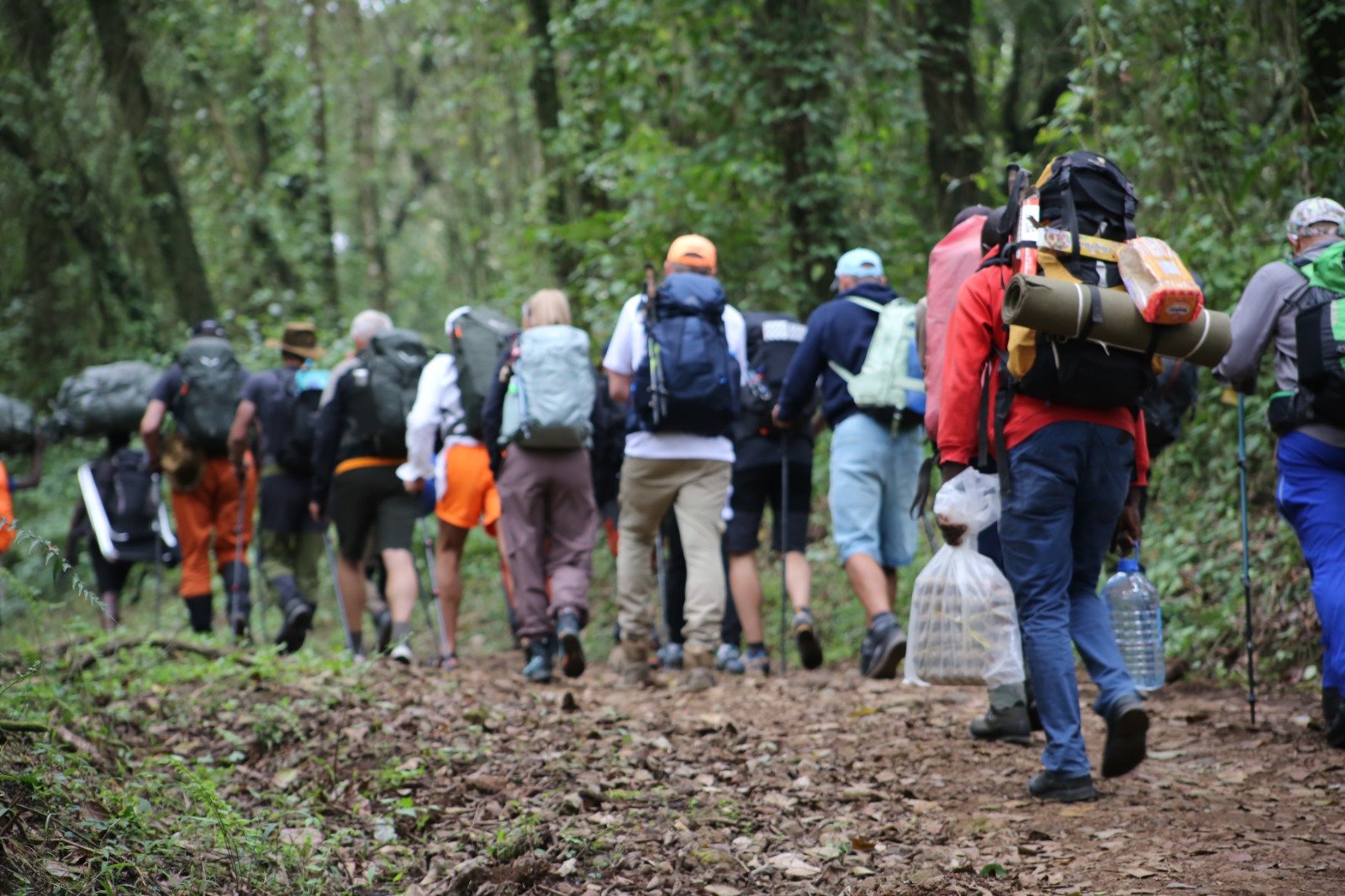
Your 6 Days Machame Route Kilimanjaro Hiking Tour begins in Moshi with a short drive to Machame Gate, located on the southern slopes of Mount Kilimanjaro. After completing park registration and meeting your professional mountain crew, you begin your climb through the beautiful rainforest zone.
The first hiking day introduces you to Kilimanjaro's natural beauty, with tall trees, colorful plants, and the sounds of birds surrounding the trail. Your guide will set a comfortable pace while helping you adjust to the mountain environment.
After approximately 5–6 hours of hiking, you arrive at Machame Camp (3,000 m), where your crew prepares your first mountain dinner and overnight stay surrounded by the peaceful rainforest.
Day 2: Machame Camp (3,000 m) to Shira Camp (3,840 m)
After breakfast, you leave the rainforest behind and continue climbing through the moorland zone toward the beautiful Shira Plateau. The landscape changes dramatically as you move higher, with giant heathers, volcanic rocks, and wide views of Mount Kibo appearing along the way.
The trail becomes more open and scenic, offering excellent opportunities to take photos of the mountain and the valleys below. Your guide maintains a steady pace to support proper acclimatization.
You spend the night at Shira Camp (3,840 m), where you can enjoy breathtaking sunset views across the plateau.
Day 3: Shira Camp (3,840 m) to Lava Tower (4,600 m) to Barranco Camp (3,960 m)
Today is an important acclimatization day on the 6 Days Machame Route Kilimanjaro Hiking Tour. You climb higher toward Lava Tower before descending to Barranco Camp, allowing your body to adjust to the increasing altitude.
The trail crosses the alpine desert zone, where vegetation becomes sparse and the volcanic landscape creates a unique Kilimanjaro experience. At Lava Tower (4,600 m), your guide monitors your condition before you begin the descent.
The descent to Barranco Camp (3,960 m) offers beautiful views of the Southern Glaciers and the impressive Barranco Wall, one of the most famous sections of the Machame Route.
Day 4: Barranco Camp (3,960 m) to Karanga Camp (4,035 m)
After breakfast, you begin one of the most exciting parts of the Machame Route by climbing the famous Barranco Wall. Although the wall looks challenging from below, it is a fun scrambling section where your guide helps you safely navigate the rocks.
After reaching the top, you continue across ridges and valleys with spectacular views of Kibo Peak. The shorter hiking distance today allows you to rest and prepare for the final stages of your climb.
You arrive at Karanga Camp (4,035 m) in the afternoon and enjoy a peaceful evening before continuing toward the summit base camp.
Day 5: Karanga Camp (4,035 m) to Barafu Camp (4,640 m)
Today's hike takes you through the dry alpine landscape toward Barafu Camp, the final camp before your summit attempt. Although the distance is shorter, the altitude makes the journey more demanding.
At Barafu Camp, you will rest, enjoy your meals, and receive a summit briefing from your guide. Your crew prepares everything you need before the midnight climb to Uhuru Peak.
Day 6: Barafu Camp (4,640 m) to Uhuru Peak (5,895 m) to Mweka Camp (3,100 m)
Your summit adventure begins around midnight with a slow and steady climb through the volcanic scree toward Stella Point (5,739 m). This is the most challenging section of the journey, but your guide will support you every step of the way.
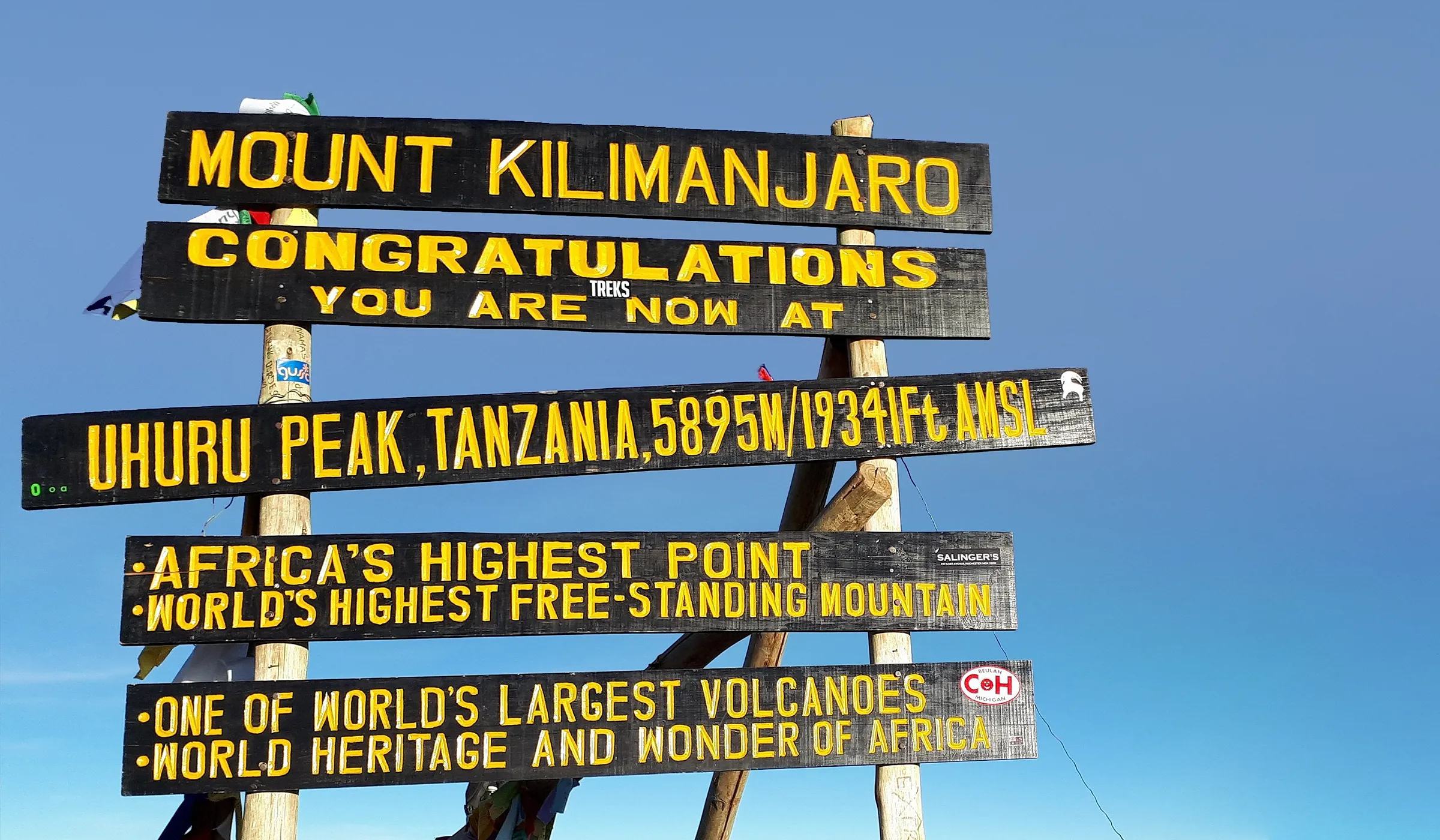
From Stella Point, you continue along the crater rim to Uhuru Peak (5,895 m), the highest point in Africa. Standing on the Roof of Africa is an unforgettable achievement and a moment to celebrate your dedication.
After taking photos at the summit, you descend through Barafu Camp and continue down to Mweka Camp (3,100 m) in the rainforest zone, completing your Kilimanjaro adventure.


