
6 Days Marangu Route Kilimanjaro Hiking Tour
From $1,450

6 Days Marangu Route

6 Days Marangu Route (Hut Accommodation)

The only Kilimanjaro route with mountain huts. Six-day itinerary with extra acclimatization day at Horombo Hut and summit of Uhuru Peak at 5,895 m.

6 Days Marangu Route Kilimanjaro Hiking Tour

The 6 days Marangu Route is a six-day trekking route to Uhuru Peak, the highest point of Mount Kilimanjaro at 5,895 metres. It is the only Kilimanjaro route that uses mountain huts for overnight accommodation instead of camping tents. The route starts and ends at Marangu Gate on the southeastern side of the mountain.

This six-day itinerary includes an extra acclimatization day at Horombo Hut. The extra day gives your body more time to adjust to the increasing altitude before you continue toward Kibo Hut and the summit.

The route passes through different natural environments, from the green rainforest around Marangu Gate to the open alpine desert near Kibo. The final climb to Uhuru Peak is the most demanding part of the trek and requires a long night of walking at high altitude.
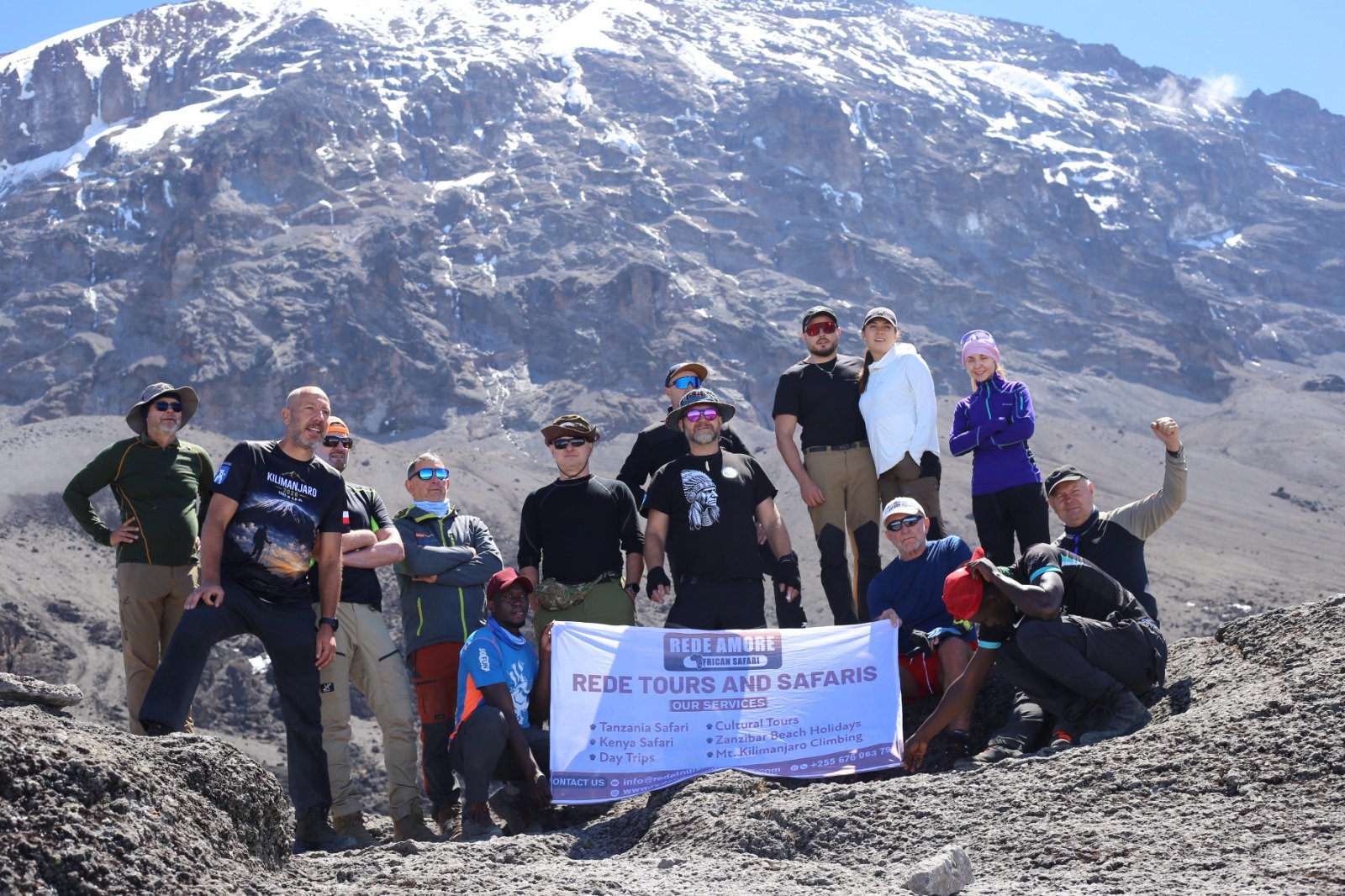
Climbing Mount Kilimanjaro via Marangu Route to Uhuru Peak

6 Days Marangu Route Itinerary

1

Day 1: Marangu Gate to Mandara Hut

The 6 days Marangu Route begins at Marangu Gate, where your registration and park entry procedures are completed before you start walking. From the gate, the trail enters the rainforest and follows a well-defined path toward Mandara Hut.

The first day is usually a gentle introduction to Kilimanjaro. You walk through thick forest, where you may see birds, monkeys and different types of mountain plants.

  • Starting elevation: Marangu Gate — about 1,860 m
  • Ending elevation: Mandara Hut — about 2,720 m
  • Distance: about 8 km
  • Hiking time: 4–5 hours
  • Accommodation: Mandara Hut

After reaching Mandara Hut, you have time to rest, eat and prepare for the next day.

2

Day 2: Mandara Hut to Horombo Hut

After breakfast, the trail leaves the rainforest and enters the heath and moorland zone. The landscape becomes more open as you continue toward Horombo Hut.

You will begin to notice the size of Kilimanjaro more clearly as the vegetation becomes shorter and the views open toward the surrounding mountain landscape.

  • Starting elevation: Mandara Hut — about 2,720 m
  • Ending elevation: Horombo Hut — about 3,720 m
  • Distance: about 12 km
  • Hiking time: 6–8 hours
  • Accommodation: Horombo Hut

Horombo is an important stop on the 6 days Marangu Route because you will spend two nights here. This helps provide more time for acclimatization before climbing higher.

3

Day 3: Horombo Hut Acclimatization Day

Day 3 is an important part of the six-day route. Instead of moving to a higher sleeping camp, you spend another night at Horombo Hut and use the day for acclimatization.

A typical acclimatization walk takes you to a higher point before returning to Horombo for the night. Your guide chooses the appropriate walking route according to the group’s condition, weather and mountain conditions.

The idea is simple: walk higher during the day and sleep lower at Horombo. This gives your body more time to adjust to the thinner air.

  • Starting elevation: Horombo Hut — about 3,720 m
  • Highest walking point: depends on the acclimatization route
  • Accommodation: Horombo Hut

Keep the day easy. It is not a day to race or prove how strong you are. Drink regularly, eat well and follow your guide's pace.

4

Day 4: Horombo Hut to Kibo Hut

After breakfast, you leave Horombo and continue toward Kibo Hut. The vegetation becomes much smaller as you enter the alpine desert zone.

The trail crosses the Saddle, the wide area between the peaks of Kibo and Mawenzi. The landscape here is very different from the forest you saw on the first day. There are fewer plants, almost no trees and much less shelter from the wind.

  • Starting elevation: Horombo Hut — about 3,720 m
  • Ending elevation: Kibo Hut — about 4,703 m
  • Distance: about 9–10 km
  • Hiking time: 5–8 hours
  • Accommodation: Kibo Hut

Once you reach Kibo Hut, the main goal is to rest and prepare for the summit. Dinner is normally served early, and you go to sleep as soon as possible because the summit climb begins during the night.

5

Day 5: Kibo Hut to Uhuru Peak to Horombo Hut

This is the summit day and the hardest part of the 6 days Marangu Route.

You normally begin around midnight or in the early hours of the morning. The trail climbs slowly over steep and rocky ground toward Gilman's Point on the crater rim.

The cold, darkness, steep terrain and high altitude make this section challenging. Your guide will keep a slow and steady pace, with regular short breaks.

After reaching Gilman's Point at about 5,680 m, you continue around the crater rim toward Uhuru Peak.

Uhuru Peak is 5,895 m above sea level and is the highest point in Africa.

After reaching the summit, you spend a short time taking photos and enjoying the achievement before beginning the descent.

  • Starting elevation: Kibo Hut — about 4,703 m
  • Summit: Uhuru Peak — 5,895 m
  • Distance: approximately 12–16 km, depending on the route measurement
  • Hiking time: approximately 12–16 hours for the complete summit day
  • Accommodation: Horombo Hut

After descending from the summit, you continue down to Horombo Hut where you spend your final night on the mountain.

6

Day 6: Horombo Hut to Marangu Gate

After breakfast, you begin the final descent from Horombo Hut to Marangu Gate.

The trail takes you back through the moorland and rainforest zones. As you lose altitude, the air becomes warmer and the vegetation becomes greener.

  • Starting elevation: Horombo Hut — about 3,720 m
  • Ending elevation: Marangu Gate — about 1,860 m
  • Distance: about 18–20 km
  • Hiking time: 5–7 hours

At Marangu Gate, you complete the required exit procedures and receive your summit certificate if you reached the required summit point. From the gate, you can continue with your onward transport arrangements.

6 Days Marangu Route Cost

The cost of the 6 days Marangu Route starts at $1,450 per person for group sharing and $1,890 per person for a private hike, depending on the group size, travel dates and services included in your booking.

The price covers the main services required for the mountain trek. Private climbs provide a more flexible experience, while group sharing allows you to trek with other hikers.

For an exact quotation, the final price can be confirmed based on your trekking date, number of hikers and preferred group or private arrangement.

Tour Inclusions

  • Kilimanjaro National Park entry and camping or hut fees required for the route
  • Mountain guide services
  • Porters for carrying mountain equipment and supplies
  • Cook and mountain meals
  • Accommodation in mountain huts during the trek
  • Drinking water on the mountain
  • Rescue and emergency mountain support arrangements
  • Government taxes and applicable park charges
  • Pick-up and drop-off arrangements included in your confirmed booking

Any additional hotel nights, airport services or personal arrangements should be confirmed in your quotation before booking.

Tour Exclusions

  • International flights
  • Tanzania visa fees
  • Travel insurance
  • Personal medical expenses
  • Personal hiking equipment and clothing
  • Tips for the mountain crew
  • Alcoholic drinks and other personal beverages
  • Laundry and other personal hotel services
  • Extra hotel nights not included in the booking
  • Personal expenses and items not specifically listed in the confirmed quotation

Before booking, check the final inclusions and exclusions so you know exactly what you are paying for.

Difficulty of the 6 Days Marangu Route

The 6 days Marangu Route is considered a moderate-to-challenging trek. The trail itself is well established, but reaching 5,895 m is physically demanding because the amount of oxygen in the air decreases as you climb higher.

The first few days are usually manageable for a reasonably active person. The main challenge comes on summit day, when you climb from Kibo Hut to Uhuru Peak and then descend to Horombo Hut on the same day.

The six-day itinerary has an important advantage over the shorter Marangu itinerary: Day 3 is used for acclimatization at Horombo Hut. This gives your body additional time to adjust before you sleep at Kibo Hut and attempt the summit.

You do not need technical climbing skills to follow the Marangu Route. There is no rock climbing or rope climbing on the normal trail. However, you should be prepared for long walking days, cold temperatures and high altitude.

Is the 6 Days Marangu Route Suitable for Beginners?

Yes. Beginners can climb the 6 days Marangu Route if they are reasonably fit and properly prepared.

You do not need previous mountain-climbing experience. What matters more is being able to walk for several hours, manage long uphill sections and follow a slow pace.

Your guide will monitor your condition throughout the trek. If you develop symptoms of altitude sickness or become seriously unwell, tell your guide immediately. Do not hide symptoms because you want to reach the summit.

What to Bring for the 6 Days Marangu Route

Because the Marangu Route uses huts, you do not need to carry a camping tent. However, you still need warm and waterproof clothing because conditions change quickly on the mountain.

Essential Clothing

  • Thermal base-layer top and bottom
  • Fleece or warm mid-layer
  • Warm hiking jacket
  • Waterproof and windproof jacket
  • Waterproof trousers
  • Trekking trousers
  • T-shirts
  • Warm hat or beanie
  • Sun hat
  • Gloves
  • Several pairs of trekking socks
  • Comfortable underwear

Hiking Equipment

  • Comfortable, well-tested hiking boots
  • Day backpack
  • Rain cover for your backpack
  • Headlamp with spare batteries
  • Trekking poles
  • Water bottles or a hydration bladder
  • Sunglasses
  • Sunscreen
  • Personal first-aid items
  • Toiletries
  • Sleeping bag suitable for cold mountain conditions

A sleeping bag is still required even though you sleep inside mountain huts. Temperatures around the higher camps can become very cold, particularly at night and during the summit attempt.

Keep your personal mountain luggage manageable. A small daypack should contain the things you need while walking, while your main trekking bag is carried by the porters where porter service is included.

Best Time for the 6 Days Marangu Route

The 6 days Marangu Route can be climbed throughout the year; but the best recommended time to hike kilimanjaro via the classic marangu route is during the dry season which starts at june to october. This period is preferd because the trail is generally more comfortable and summit conditions can be better.

The commonly preferred periods are:

  • January to February: generally warm and relatively dry, although short rains can occur.
  • June to October: generally dry and popular for Kilimanjaro trekking.
  • December: can provide good trekking conditions, although weather can change.

The mountain has its own weather, so there is no month when rain, clouds or cold can be completely ruled out.

For the summit, the most important thing is not simply choosing a month. Your guide also considers the weather and mountain conditions during the trek.

How to Book the 6 Days Marangu Route

Booking the 6 days Marangu Route is straightforward. To prepare your trek, provide:

  • Your preferred trekking date
  • Number of hikers
  • Whether you want a group-sharing or private climb
  • Your accommodation requirements before and after the mountain
  • Any dietary requirements or important travel information

Once your trek is confirmed, you should receive the information needed to prepare for the climb, including the packing list and arrangements for your mountain departure.

What Happens Before the Climb?

If your booking includes accommodation in Moshi, you normally meet the mountain team before the trek begins. Your guide can check your equipment and explain the plan for the following day.

This is also the right time to make sure you have the correct clothing, footwear, sleeping bag and personal items before heading to Marangu Gate.

Ready to Climb the 6 Days Marangu Route?

If you are ready to book the 6 days Marangu Route, send us your preferred trekking date and the number of people in your group.

We can confirm availability, provide the exact quotation and help you prepare for your climb to Uhuru Peak at 5,895 metres.

Common Questions

6 Days Marangu Route FAQs

Everything you need to know before climbing Kilimanjaro via the Marangu Route.

The highest point is Uhuru Peak at 5,895 metres (19,341 feet) above sea level. The route starts at approximately 1,860 metres at Marangu Gate and gains more than 4,000 metres before reaching the summit.
You normally spend five nights on the mountain:
  • Night 1 — Mandara Hut
  • Night 2 — Horombo Hut
  • Night 3 — Horombo Hut
  • Night 4 — Kibo Hut
  • Night 5 — Horombo Hut
This is one of the main features of the six-day itinerary. You spend two nights at Horombo before continuing toward Kibo.
No. The Marangu Route uses mountain huts for overnight accommodation. This makes it different from most other Kilimanjaro routes, where trekkers normally sleep in tents. The huts provide a shared place to sleep and rest, but they should not be confused with a hotel. Conditions on the mountain are basic.
The extra day at Horombo gives your body more time to adjust to the increasing altitude before you climb higher. Day 3 is therefore not a wasted day. It is an important part of the six-day itinerary and helps prepare you for the higher elevations ahead.
Summit day can take approximately 12–16 hours, depending on your pace, conditions and the time spent at the summit. You normally leave Kibo Hut around midnight or in the early morning, reach the summit after several hours of climbing, and then descend to Horombo Hut.
The summit section from Kibo Hut to Uhuru Peak is the hardest part. You climb at high altitude, usually in darkness and cold conditions, before descending several hours later. The combination of altitude, steep terrain, cold and a long walking day makes this section much harder than the earlier days.
Yes. Previous Kilimanjaro experience is not required. A beginner who is reasonably fit, properly equipped and able to follow the guide's pace can attempt the route. The most important thing is to take the climb slowly and communicate with your guide if you feel unwell.
The trail on Marangu is generally straightforward and does not require technical climbing. However, the summit is still 5,895 m high, so it should not be described as an easy mountain climb. The six-day version also provides more acclimatization time than the shorter Marangu itinerary.
If your guide determines that continuing is unsafe because of altitude sickness, exhaustion or another serious problem, you will descend to a safer elevation. Reaching the summit is never more important than your safety. Depending on where you turn around, you may still receive recognition for reaching a lower summit point or high point according to the applicable mountain and park procedures.
Yes. The route can be arranged as a private climb, allowing your group to have its own guide and mountain crew rather than joining a scheduled group. Private climbing is useful when you want more flexibility with your trekking dates and group arrangements.
The main difference is the extra acclimatization day. The 5-day Marangu Route moves upward without a full additional acclimatization day at Horombo, while the 6-day Marangu Route spends an extra night at Horombo before continuing to Kibo. The six-day itinerary therefore gives you more time on the mountain to adjust to the altitude.
Marangu is commonly known as the Coca-Cola Route, a nickname that comes from its long history as one of the most established and popular routes on Kilimanjaro. Today, the route remains known for its hut accommodation and well-established trail.
Yes. Even though you sleep in huts, you still need a warm sleeping bag. Temperatures at the higher camps can become very cold, especially around Kibo Hut and during the summit attempt.
The 6 days Marangu Route starts at $1,450 per person for group sharing and $1,890 per person for a private hike. The final price depends on the number of hikers, trekking dates and the services included in your booking. For an exact price, provide your preferred date and number of hikers so the booking can be prepared according to your requirements.
Traveler Experiences

What Our Guests Say

Real stories from travelers who explored Tanzania with Rede Tours and Safaris.

Reviews are collected from TripAdvisor.