

7 Days Lemosho Route Kilimanjaro Climbing | Itinerary & Prices 2027/2028
The 7-Day Lemosho Route approaches Kilimanjaro from the western side at Londorossi gate, crossing rainforest, Shira Plateau and alpine desert before reaching Uhuru Peak at 5,895 m. The climb features scenic tented camps, Lava Tower acclimatization, Barranco Wall and experienced mountain guides.
About the 7 Days Lemosho Route
The 7 Days Lemosho Route is one of the most scenic and well-balanced established routes for climbing Mount Kilimanjaro, approaching the mountain from its western side through Londorossi Gate and the Lemosho trailhead. The route passes through several distinct vegetation and climate zones, starting in the tropical montane rainforest and continuing through heathland, the open Shira Plateau, alpine desert and the Arctic summit zone. The ascent follows a well-established mountain trail to Uhuru Peak (5,895 m), the highest point in Africa.
Lemosho is widely regarded for its gradual ascent profile and excellent acclimatization opportunities. Unlike hut-based routes, climbers sleep in mountain tents at designated camps throughout the trek. Accommodation along the seven-day route is provided at Mti Mkubwa Camp (Big Tree Camp, approx. 2,650–2,800 m), Shira 2 Camp (approx. 3,850 m), Barranco Camp (approx. 3,960 m), Karanga Camp (approx. 4,035 m) and Barafu Camp (approx. 4,670 m). Tents, sleeping mats and a dining tent are provided as part of the mountain service.
The seven-day variation includes the important “climb high, sleep low” day via Lava Tower (approx. 4,600 m) before descending to Barranco Camp. This profile, together with the Barranco Wall and two shorter high camps before summit night, gives the body more time to adjust than shorter itineraries. The distance and elevation gain still make the climb physically demanding, particularly on the long Shira Plateau day and during the overnight summit climb. Good physical preparation, a controlled walking pace and careful attention to altitude-related symptoms are essential.
The lower section of the Lemosho Route runs through dense rainforest, where the trail is surrounded by tall trees, moss-covered vegetation and mountain forest wildlife including colobus and blue monkeys. Above Mti Mkubwa Camp the forest gradually gives way to heath and moorland as the path climbs onto the vast Shira Plateau, an ancient volcanic caldera offering open views of Kibo. As the trail approaches Lava Tower and then Barranco, the vegetation becomes sparse and the landscape changes into the exposed alpine desert.
From Barafu Camp the route continues towards the summit during a midnight ascent. Climbers follow the steep volcanic scree slopes towards Stella Point (5,756 m) on the crater rim, then continue along the rim to Uhuru Peak (5,895 m). This final section is demanding because of the steep terrain, high altitude and cold summit conditions. Reaching Uhuru Peak marks the highest point of the Lemosho Route and provides panoramic views across the mountain’s summit landscape.
After the summit attempt, climbers descend towards Barafu Camp before continuing down the Mweka trail to Mweka Camp for an overnight rest. The final descent follows the Mweka trail through the rainforest to Mweka Gate. Throughout the climb, professional mountain guides, porters and the supporting mountain crew manage the trekking arrangements, camp setup, meals, group progress and mountain safety procedures.
7 Days Lemosho Route Itinerary Highlights
- Day 1: Moshi to Londorossi Gate and on to Mti Mkubwa Camp
- Day 2: Mti Mkubwa Camp to Shira 2 Camp
- Day 3: Shira 2 Camp to Lava Tower to Barranco Camp
- Day 4: Barranco Camp (via Barranco Wall) to Karanga Camp
- Day 5: Karanga Camp to Barafu Camp
- Day 6: Summit day — Barafu Camp to Uhuru Peak, then down to Mweka Camp
- Day 7: Mweka Camp to Mweka Gate and transfer to Moshi
7 Days Kilimanjaro Lemosho route Full Itinerary
Day 1: Londorossi Gate to Mti Mkubwa Camp
After breakfast in Moshi, your driver takes you to Londorossi Gate on the western side of Kilimanjaro. Here, you complete park registration and meet the team handling your climb. Once the formalities are finished, you get back into the vehicle for the drive to the Lemosho trailhead, where your walk begins.
From the trailhead, you walk through thick rainforest along a path surrounded by tall trees, ferns and other forest plants. Keep an eye out for black-and-white colobus monkeys and forest birds. After about 3–4 hours, you reach Mti Mkubwa Camp, also called Big Tree Camp, where your crew has prepared your tent and dinner.
- Starting elevation: Lemosho Trailhead — about 2,100–2,400 m
- Ending elevation: Mti Mkubwa Camp — about 2,650–2,800 m
- Distance: about 6 km
- Hiking time: 3–4 hours
- Accommodation: Mti Mkubwa Camp (tents)
Day 2: Mti Mkubwa Camp to Shira 2 Camp
After breakfast, you continue along the forest path before reaching the heath and moorland zone. The tall trees become shorter, and the path takes you across open ground with grasses, shrubs and volcanic rocks. As you climb higher, the Shira Plateau opens up, giving you wide views of Kibo Peak and the mountain around you.
This is a longer day, with about 14–16 km of walking. You cross the Shira Plateau and make your way towards Shira 2 Camp at around 3,850 m. The higher altitude may make the walk feel harder, so take your time, drink water and follow your guide's pace. Dinner and the overnight stay are at Shira 2 Camp.
- Starting elevation: Mti Mkubwa Camp — about 2,650–2,800 m
- Ending elevation: Shira 2 Camp — about 3,850 m
- Distance: about 14–16 km
- Hiking time: 7–8 hours
- Accommodation: Shira 2 Camp (tents)
Day 3: Shira 2 Camp to Lava Tower to Barranco Camp
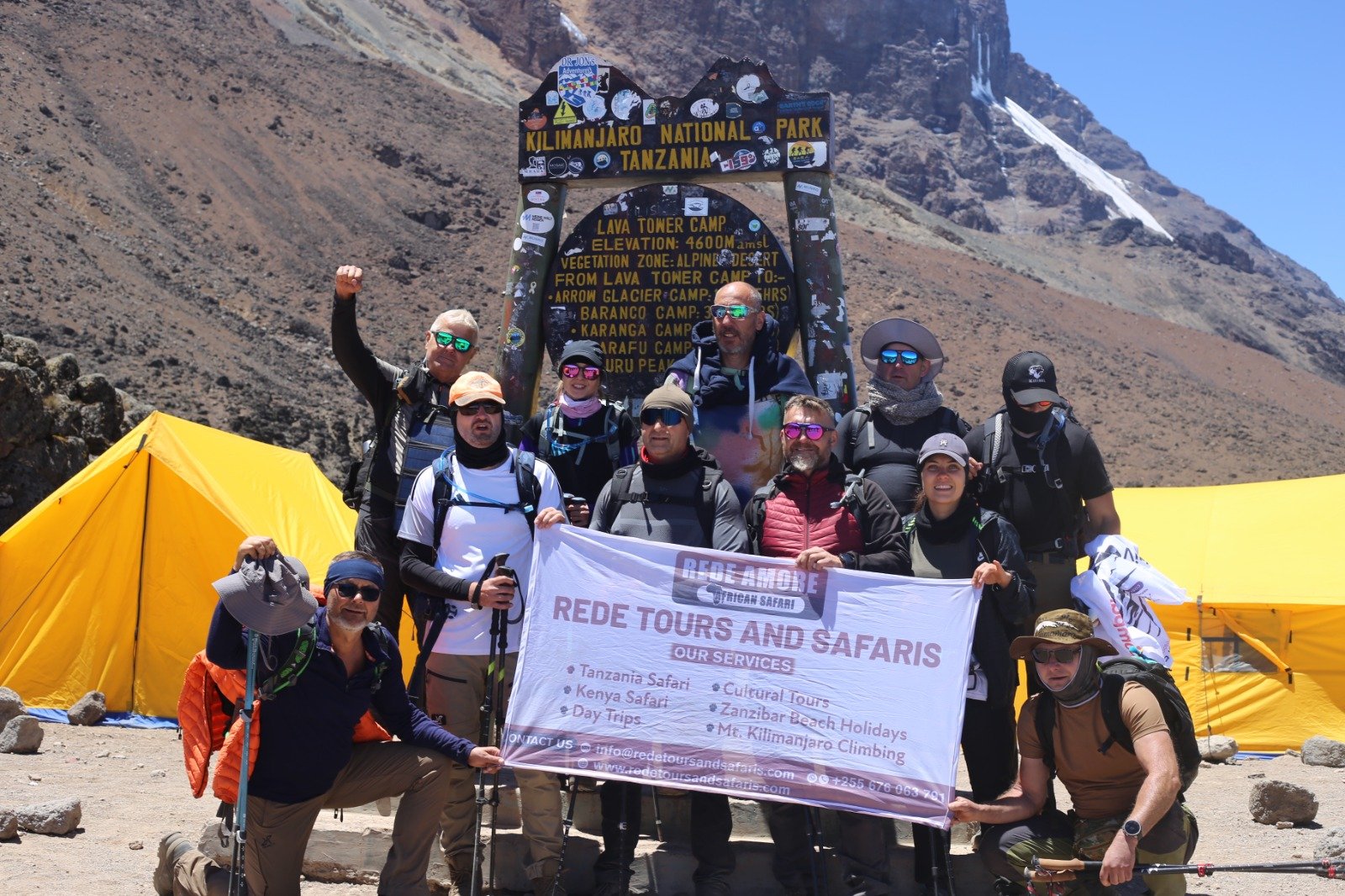
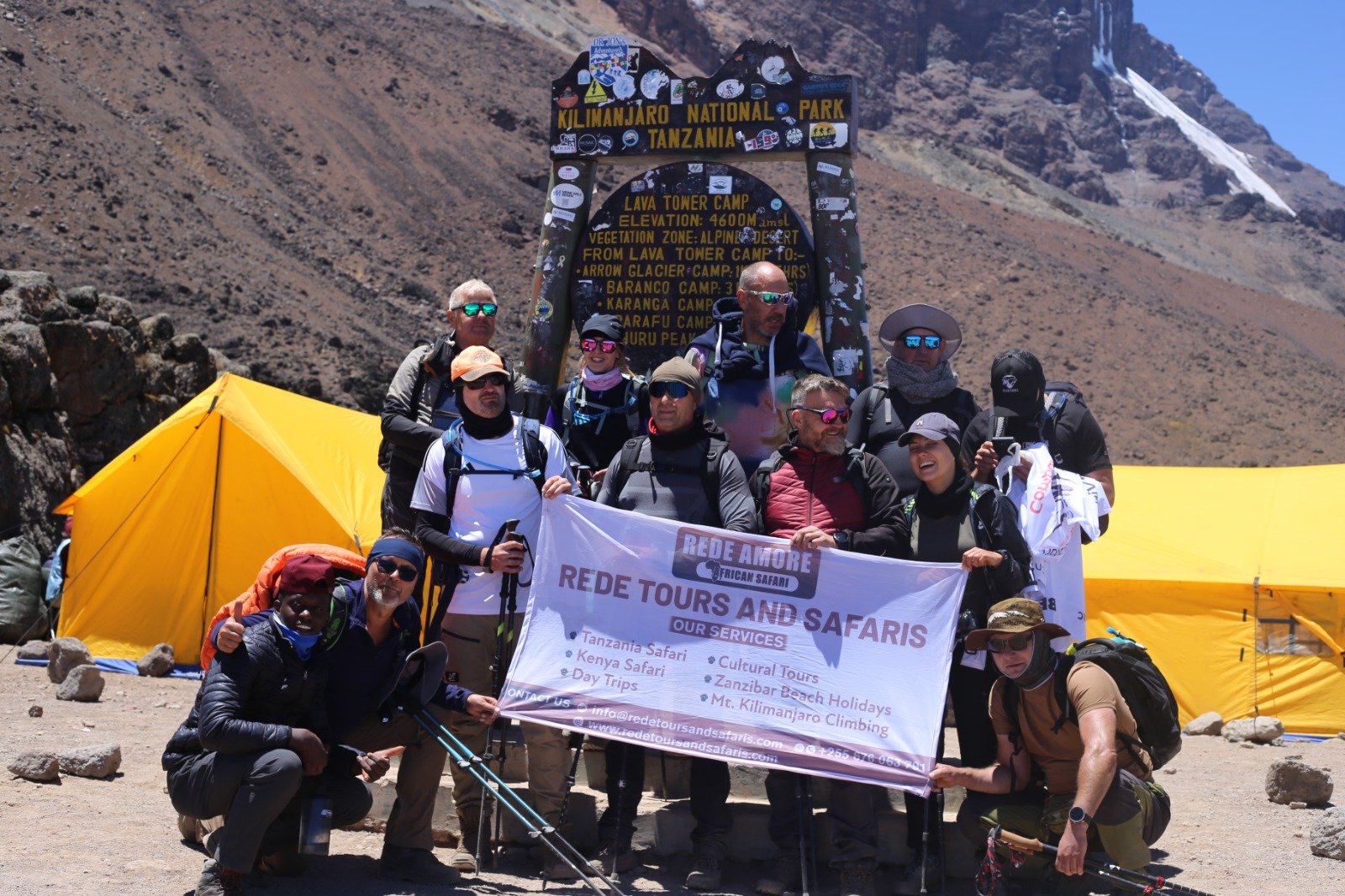
You start the day by walking across the high mountain slopes towards Lava Tower, which stands at about 4,600 m. The path climbs through rocky ground with very little plant cover. You stop near Lava Tower for lunch before walking down towards Barranco Camp. This is the climb-high, sleep-low day, where you reach a higher point before spending the night at a lower altitude.
The walk down takes you into the Barranco Valley, with the large Barranco Wall coming into view near camp. By the time you reach Barranco Camp at about 3,960 m, you will have gained and lost considerable height during the day. Take time to eat, drink water and rest before the next morning's climb up the wall.
- Starting elevation: Shira 2 Camp — about 3,850 m
- High point: Lava Tower — about 4,600 m
- Ending elevation: Barranco Camp — about 3,960 m
- Distance: about 10 km
- Hiking time: 6–8 hours
- Accommodation: Barranco Camp (tents)
Day 4: Barranco Camp to Karanga Camp
After breakfast, you face the Barranco Wall, one of the most memorable parts of the Lemosho Route. The path goes up a steep rocky slope, and in some places you use your hands to help keep your balance. You do not need technical climbing equipment, but your guide will show you where to step as you make your way up.
At the top, you get wide views of the mountain and the valleys below. From there, you walk across a series of rocky slopes and valleys before reaching Karanga Camp at about 4,035 m. The walk is shorter than the previous day, giving you time to eat and rest at camp.
- Starting elevation: Barranco Camp — about 3,960 m
- Ending elevation: Karanga Camp — about 4,035 m
- Distance: about 5–7 km
- Hiking time: 3–5 hours
- Accommodation: Karanga Camp (tents)
Day 5: Karanga Camp to Barafu Camp
After breakfast, you walk uphill from Karanga Camp towards Barafu Camp. The path crosses dry, rocky ground with very little vegetation as you get closer to the high mountain slopes. This is a shorter walk, but the altitude makes it important to keep a steady pace.
You reach Barafu Camp at about 4,670 m, the base camp for your summit attempt. After an early meal, your guide explains the plan for the night and checks that you have the warm clothes, headlamp and other items needed for the climb. Try to rest during the afternoon because you will start walking towards the summit around midnight.
- Starting elevation: Karanga Camp — about 4,035 m
- Ending elevation: Barafu Camp — about 4,670 m
- Distance: about 4–6 km
- Hiking time: 3–5 hours
- Accommodation: Barafu Camp (tents)
Day 6: Barafu Camp to Uhuru Peak to Mweka Camp
Your summit climb starts around midnight while it is still dark and cold. With your headlamp on, you walk slowly up the steep rocky path from Barafu Camp towards Stella Point on the crater rim. The climb is tough because of the high altitude, low temperatures and long hours of walking. Your guide sets a steady pace and checks how you are feeling along the way.
From Stella Point, you follow the crater rim to Uhuru Peak at 5,895 m, the highest point in Africa. Take time for photos and enjoy the moment before walking back down to Barafu Camp for a short rest and some food. You then continue down the Mweka Route to Mweka Camp, where you spend your final night on the mountain.
- Starting elevation: Barafu Camp — about 4,670 m
- Highest point: Uhuru Peak — 5,895 m
- Ending elevation: Mweka Camp — about 3,100 m
- Hiking time: about 11–15 hours
- Accommodation: Mweka Camp (tents)
Day 7: Mweka Camp to Mweka Gate to Moshi
After breakfast, you walk down from Mweka Camp through the rainforest towards Mweka Gate. The path goes downhill through thick vegetation, and some sections can be muddy or slippery, especially after rain. Take care with your footing as you make your way to the park exit.
At Mweka Gate, you complete the park exit formalities and receive your summit certificate if you reached the required point. Your driver meets you at the gate for the journey back to Moshi. After seven days on the mountain, you can finally enjoy a hot shower, a proper bed and some time to celebrate your climb.
- Starting elevation: Mweka Camp — about 3,100 m
- Ending elevation: Mweka Gate — about 1,640–1,680 m
- Distance: about 8–10 km
- Hiking time: 3–5 hours
- Transfer: Mweka Gate to Moshi
7-Day Lemosho Route Kilimanjaro climbing Costs
For 2027/2028, the 7-day Lemosho Route typically costs about $1,790 per person on a group-sharing basis and higher for a private climb. The exact figure depends on group size, travel dates and the services confirmed in your package.
Group sharing keeps the cost lower by combining hikers, while a private climb gives you more control over pace and departure timing. Core mountain services are included in both options.
Share your preferred dates, number of hikers and private or shared preference to receive a confirmed quotation.
| Number of Hikers | Group Sharing (Per Person) | Private Hike (Per Person) |
|---|---|---|
| 1 Hiker | — | $2,150 |
| 2–3 Hikers | $1,790 | $1,990 |
| 4–7 Hikers | $1,690 | $1,850 |
| 7+ Hikers | $1,590 | $1,750 |
Prices are per person for 2027/2028. Final quotation confirmed in writing.
Tour Inclusions
- Kilimanjaro National Park entry and camping fees required for the route
- Mountain guide services
- Porters for carrying mountain equipment and supplies
- Cook and mountain meals
- Accommodation in mountain tents during the trek
- Sleeping mats and dining tent
- Drinking water on the mountain
- Rescue and emergency mountain support arrangements
- Government taxes and applicable park charges
- Pick-up and drop-off arrangements included in your confirmed booking
Any additional hotel nights, airport services or personal arrangements should be confirmed in your quotation before booking.
Tour Exclusions
- International flights
- Tanzania visa fees
- Travel insurance
- Personal medical expenses
- Personal hiking equipment and clothing
- Tips for the mountain crew
- Alcoholic drinks and other personal beverages
- Laundry and other personal hotel services
- Extra hotel nights not included in the booking
- Personal expenses and items not specifically listed in the confirmed quotation
Before booking, check the final inclusions and exclusions so you know exactly what you are paying for.


