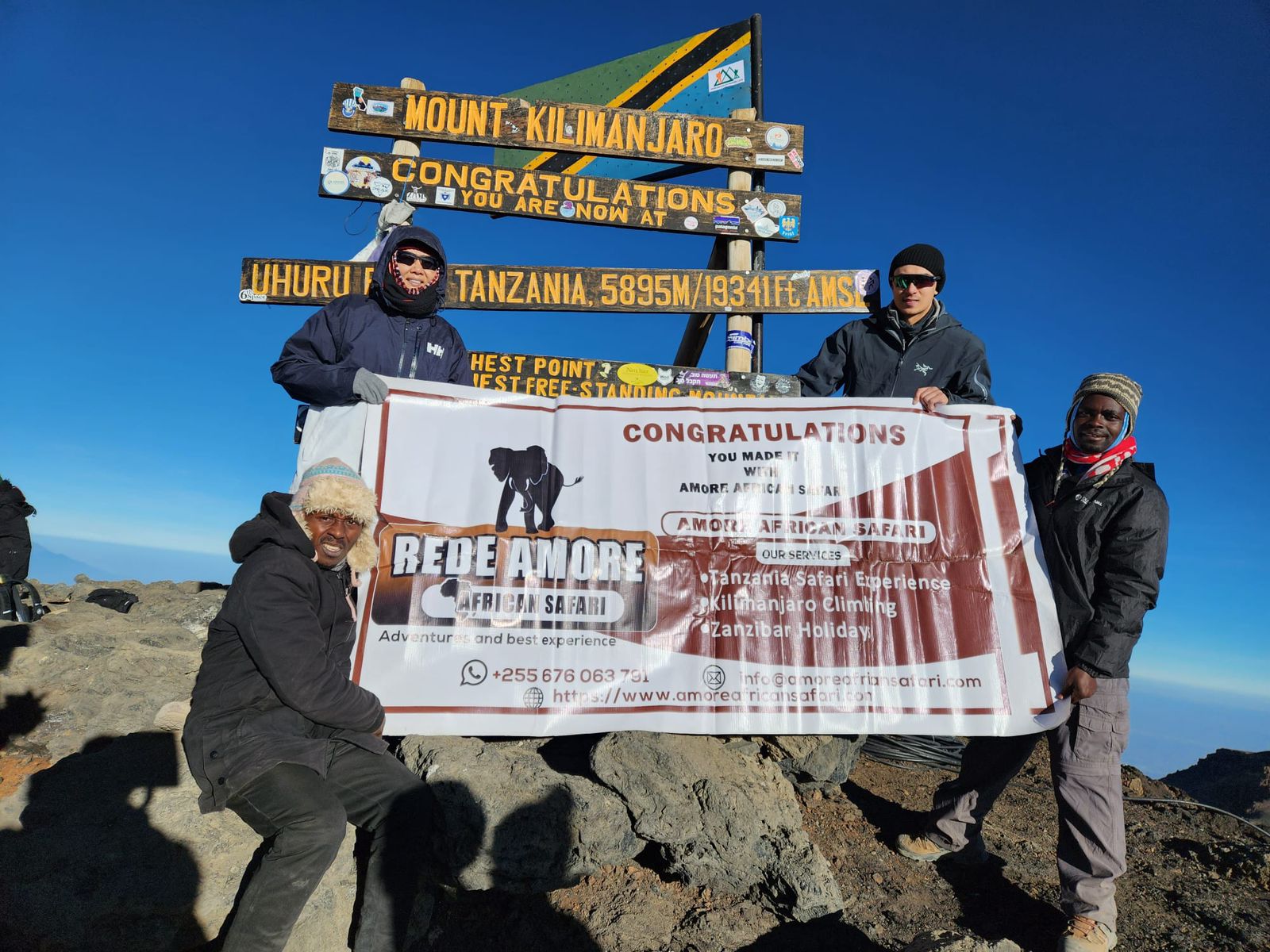
5-Day Marangu Route Kilimanjaro Hiking Tour
Climb Mount Kilimanjaro on the 5-Day Marangu Route through rainforest, moorland, and alpine terrain, staying in mountain huts as you ascend to Uhuru Peak at 5,895m with our experienced mountain guides.
- Route name: 5-Day Marangu Route Kilimanjaro Hiking Tour
- Starting point: Moshi, Tanzania
- Starting gate: Marangu Gate (1,860 m) on the eastern side of Mount Kilimanjaro
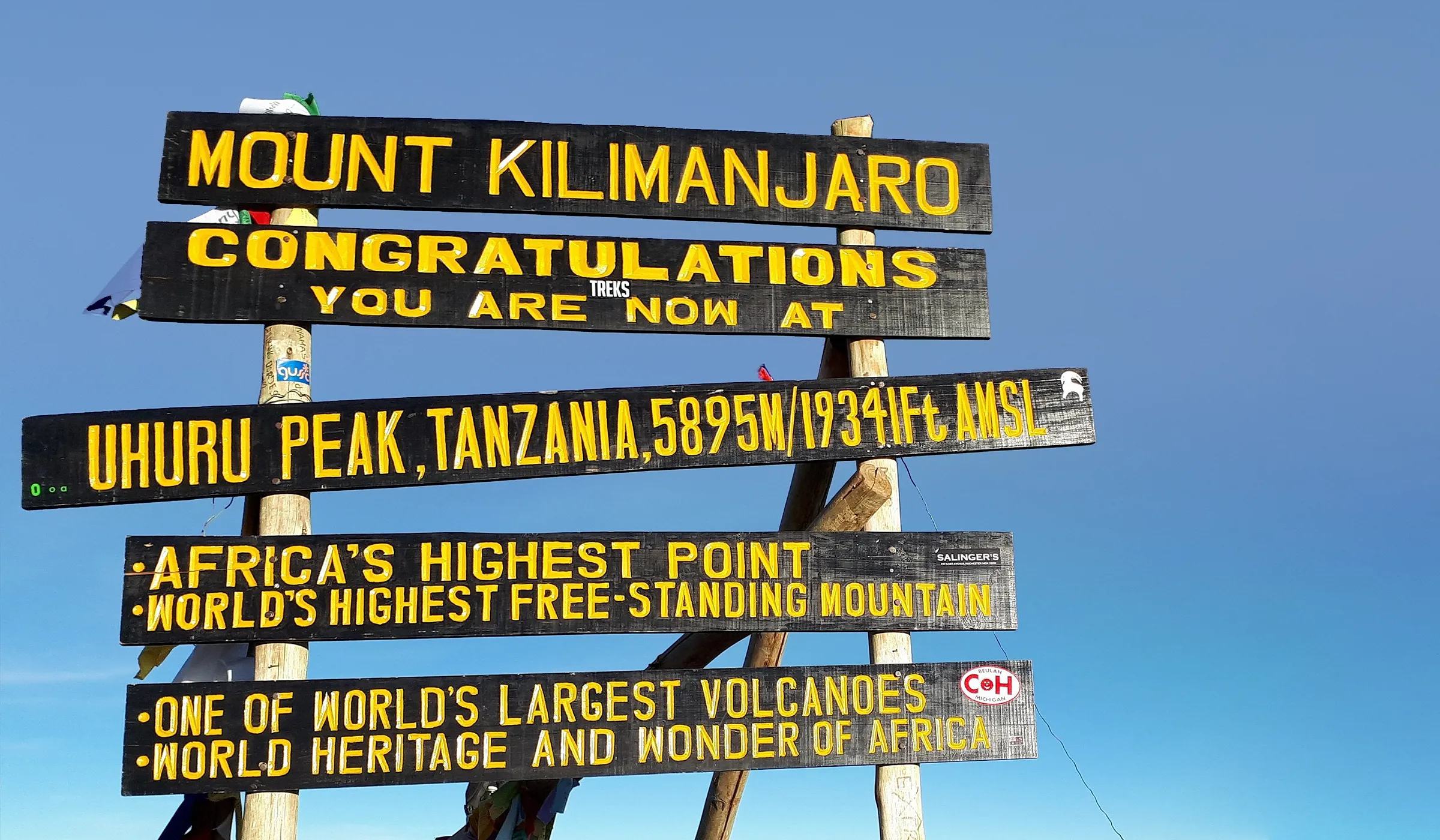
- Summit: Uhuru Peak, 5,895 m (Roof of Africa)
- Route direction: Marangu Gate → Mandara Hut → Horombo Hut → Kibo Hut → Uhuru Peak → Horombo Hut → Marangu Gate
- Daily hiking: 4–8 hours on regular hiking days; around 12–15 hours during the summit attempt
- Difficulty level: Moderate to challenging; suitable for physically prepared hikers
- Accommodation: Mountain huts with shared sleeping facilities and support from a professional mountain crew
- Summit success: Supported by proper preparation, steady pacing, careful altitude management, and experienced mountain guides
- Best months: January–March and June–October
- Price range: USD 1,550–2,200 per person
Overview
The 5-Day Marangu Route Kilimanjaro Hiking Tour is a classic way to climb Mount Kilimanjaro from the eastern side of the mountain. Starting at Marangu Gate, the trek passes through lush rainforest, open moorland, and the high alpine desert before reaching Uhuru Peak at 5,895 m, the highest point in Africa.
Often known as the "Coca-Cola Route," Marangu is the only Kilimanjaro route where hikers stay in mountain huts throughout the climb. The route follows a well-established trail through Mandara Hut and Horombo Hut before reaching Kibo Hut, the final base for the summit attempt. Along the way, you will experience changing landscapes, impressive views of Mawenzi Peak, and the unique high-altitude environment of Kilimanjaro.
This 5-day Marangu Route itinerary follows a direct ascent without the additional acclimatization day included in longer Marangu itineraries. The schedule moves from Horombo Hut to Kibo Hut on Day 3, followed by the summit attempt and descent to Horombo Hut on Day 4. Our experienced mountain guides, porters, and support crew stay with you throughout the climb, providing guidance, meals, and practical support as you make your way toward Uhuru Peak.
5-Day Marangu Route Kilimanjaro Hiking Highlights
- Day 1: Marangu Gate (1,860 m) to Mandara Hut (2,720 m) – Enter the rainforest and hike to your first mountain hut
- Day 2: Mandara Hut (2,720 m) to Horombo Hut (3,720 m) – Continue through the moorland zone with views of Kibo and Mawenzi
- Day 3: Horombo Hut (3,720 m) to Kibo Hut (4,703 m) – Cross the alpine desert and reach the final base for the summit attempt
- Day 4: Kibo Hut (4,703 m) to Uhuru Peak (5,895 m) to Horombo Hut (3,720 m) – Begin the early-morning summit ascent and descend to Horombo Hut after reaching Uhuru Peak
- Day 5: Horombo Hut (3,720 m) to Marangu Gate (1,860 m) – Descend through the moorland and rainforest before completing your Kilimanjaro climb
Why Choose the 5-Day Marangu Route?
The 5-Day Marangu Route is a direct option for travelers who want to climb Kilimanjaro while staying in mountain huts instead of camping. The route follows a well-established trail through several of Kilimanjaro's ecological zones, from the rainforest at Marangu Gate to the moorland around Horombo and the alpine desert leading toward Kibo Hut.
Along the journey, you will walk through the lush Marangu rainforest, the open moorland around Horombo, and the high alpine desert before making the final ascent to Uhuru Peak. You will also enjoy views of Mawenzi Peak and Kibo as you gain altitude. Because the 5-day itinerary does not include an additional acclimatization day at Horombo, maintaining a steady pace, following the guide's instructions, staying hydrated, and monitoring how you feel at altitude are especially important throughout the climb.
What Is Included During Your Marangu Route Climb?
- Professional English-speaking Kilimanjaro mountain guide
- Experienced porters and mountain chef
- Park fees, hut fees, and rescue fees
- Mountain hut accommodation throughout the climb
- Three fresh meals daily during the climb
- Drinking water throughout the hiking days
- Airport transfers and hotel accommodation before and after the climb (depending on package option)
Marangu Route Accommodation and Support
The Marangu Route is different from most Kilimanjaro routes because accommodation is provided in mountain huts instead of tents. You will stay at Mandara Hut, Horombo Hut, and Kibo Hut during the ascent, with shared sleeping facilities and basic mountain amenities. Our mountain crew prepares fresh meals daily and provides continuous support throughout the trek, while our experienced guides monitor your pace and help you manage the changing altitude. Before and after your climb, we can also arrange comfortable accommodation in Moshi so you can rest and prepare for your Kilimanjaro adventure.
5 Days Marangu Route on Kilimanjaro Itinerary
Day 1: Moshi to Marangu Gate (1,860 m) to Mandara Hut (2,720 m)
The 5-Day Marangu Route Kilimanjaro Hiking Tour begins in Moshi with a drive to Marangu Gate, located on the eastern side of Mount Kilimanjaro. After arriving at the gate, the mountain crew completes the park registration while the guide prepares the group for the first day of hiking. Once everything is ready, you begin walking through the lush rainforest toward Mandara Hut.
The first section of the trail passes through a beautiful tropical forest filled with tall trees, dense vegetation, moss, colorful plants, and birdlife. The trail climbs gradually, giving you time to settle into a comfortable walking rhythm. The guide maintains a controlled pace from the beginning because steady progress and good energy management are important throughout the Kilimanjaro climb.
The hike to Mandara Hut (2,720 m) takes around 4–5 hours. After reaching the hut, the mountain crew prepares a fresh meal while you have time to rest and explore the surrounding area. If conditions and energy levels allow, you can take a short walk toward Maundi Crater for views across the surrounding landscape before returning to Mandara Hut for dinner and an overnight stay.
Day 2: Mandara Hut (2,720 m) to Horombo Hut (3,720 m)
After breakfast, you leave Mandara Hut and continue climbing through the upper rainforest before entering the open moorland zone. The vegetation changes as the dense forest gives way to giant heathers, grasses, volcanic rocks, and wider mountain views. The trail gradually becomes more open as you gain altitude toward Horombo Hut.
Along the way, you begin to see the impressive volcanic peaks of Kibo and Mawenzi. The guide maintains a steady walking pace with regular breaks, allowing you to manage the increasing elevation without rushing. The changing vegetation and views make this one of the most scenic sections of the Marangu Route.
The hike to Horombo Hut (3,720 m) takes around 5–7 hours. After arriving at the hut, you can relax, enjoy a freshly prepared meal, and take in the views of Mawenzi Peak and the surrounding highlands. The evening is spent resting and preparing for the longer and higher-altitude section toward Kibo Hut the following morning.
Day 3: Horombo Hut (3,720 m) to Kibo Hut (4,703 m)
After breakfast, you leave Horombo Hut and begin the ascent toward Kibo Hut, the final overnight stop before the summit attempt. The trail crosses the wide alpine saddle between Kibo and Mawenzi, with the landscape becoming increasingly dry and open as you leave the moorland behind.
This section takes you into the high alpine desert, where vegetation becomes sparse and the terrain is dominated by volcanic rocks, gravel, and wide mountain slopes. The increasing altitude makes this a more demanding day, so the guide maintains a slow and steady pace with regular breaks. Drinking water regularly, walking at a comfortable pace, and following the guide's instructions are important as you approach the higher elevations.
The hike to Kibo Hut (4,703 m) takes around 6–8 hours. After reaching the hut, you have time to eat, organize your summit equipment, and rest before the final ascent. The guide conducts a summit briefing covering the early departure, expected cold conditions, clothing layers, water, headlamp, walking pace, and the route toward Uhuru Peak. You then rest as much as possible before the early-morning summit attempt.
Day 4: Kibo Hut (4,703 m) to Uhuru Peak (5,895 m) to Horombo Hut (3,720 m)
The most demanding day of the 5-Day Marangu Route begins in the early hours of the morning, usually around midnight or shortly afterward. You leave Kibo Hut with your headlamp and warm clothing and begin the slow ascent toward the crater rim. The trail is steep in sections and the cold, darkness, and high altitude make this a physically demanding part of the climb.
The guide leads the group at a deliberately slow pace, allowing you to conserve energy for the higher sections. The first major objective is Gilman's Point (5,681 m) on the crater rim. From there, the route continues toward Stella Point (5,739 m) before following the crater rim toward Uhuru Peak (5,895 m), the highest point in Africa.
Reaching Uhuru Peak is a major achievement and provides spectacular views across the summit area, crater, glaciers, and surrounding African landscape when weather conditions are clear. After spending a short time at the summit for photographs and to appreciate the achievement, you begin the descent toward Kibo Hut.
After a short rest at Kibo Hut, you continue descending toward Horombo Hut (3,720 m). The lower altitude usually provides welcome relief after the summit attempt. The day involves a long period of hiking, so once you reach Horombo, the focus is on eating, rehydrating, and getting a good night's rest.
Day 5: Horombo Hut (3,720 m) to Marangu Gate (1,860 m) to Moshi
After breakfast, you begin the final descent from Horombo Hut toward Marangu Gate. The trail takes you back through the moorland zone toward Mandara Hut, allowing you to experience once again the changing vegetation and mountain scenery you passed through during the ascent.
From Mandara Hut, the trail continues downhill through the lush rainforest. The cooler forest environment and increasing vegetation mark the return to lower altitude. The guide and mountain crew remain with you throughout the descent until the trek is completed at the park gate.
The descent from Horombo Hut to Marangu Gate takes around 5–7 hours. At the gate, you complete the final park formalities and say goodbye to the mountain crew. Our driver then transfers you back to Moshi, where you can shower, relax, and recover after completing your Kilimanjaro adventure via the Marangu Route.


