
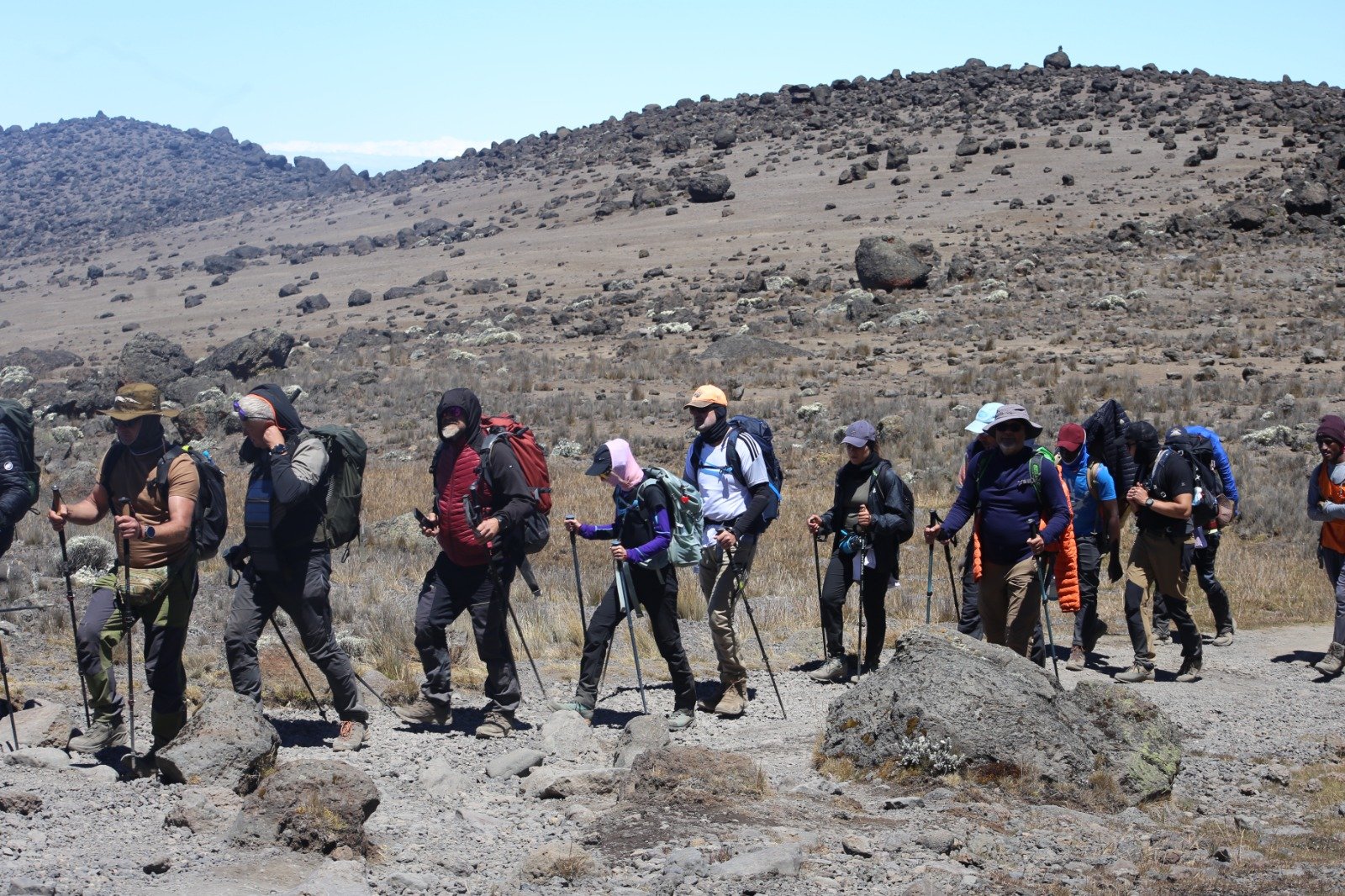
8 Days Lemosho Route Kilimanjaro Hiking Tour
From $1,850

8 Days Lemosho Route

8 Days Lemosho Route (Western Approach)

8-day Lemosho route-kilimanjaro itinerary starts at Londorossi Gate and leads to Uhuru Peak at 5,895 metres before descending through Mweka Gate, with gradual altitude gain and overnight camping.

8 Days Lemosho Route

The 8 Days Lemosho Route is an eight-day Kilimanjaro hiking itinerary that starts at Londorossi Gate and leads to Uhuru Peak at 5,895 metres before descending through Mweka Gate. The hike includes gradual altitude gain, overnight camping, an acclimatization-focused itinerary and a summit attempt from Barafu Camp.

You spend seven nights on the mountain, with your mountain crew carrying the camping equipment and preparing your meals along the route. The final summit day is the longest and most demanding part of the hike, so the earlier days are paced to help you reach the summit with enough energy.
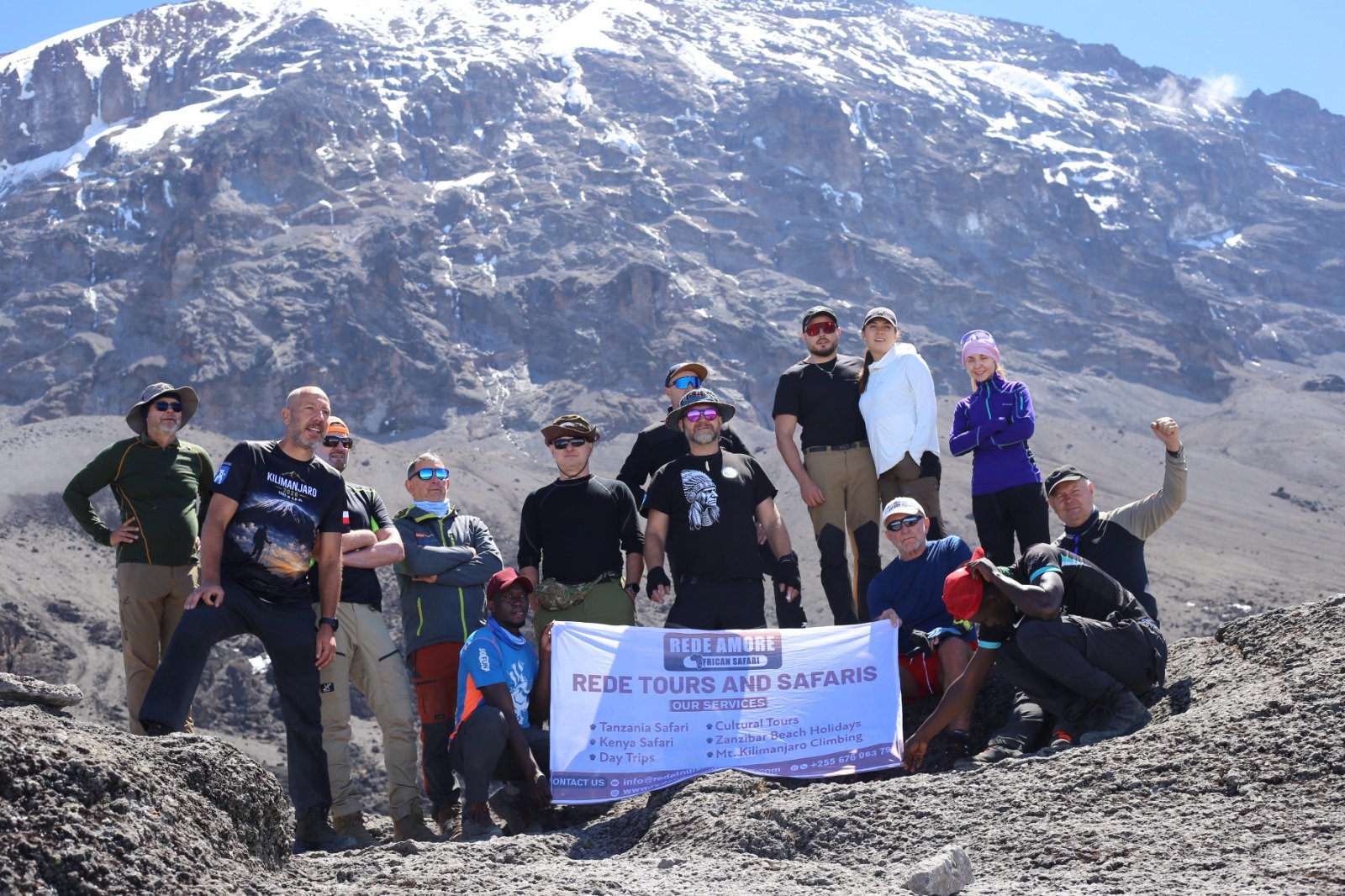
Climbing Mount Kilimanjaro via Lemosho Route to Uhuru Peak

8 Days Lemosho Route Itinerary

1

Day 1: Londorossi Gate to Forest Camp

Your 8 Days Lemosho Route begins with a transfer to Londorossi Gate on the western side of Kilimanjaro. At the gate, your guide completes the park registration while the mountain crew prepares the equipment.

You then begin hiking through the rainforest toward Forest Camp.

The trail is mostly shaded by tall trees, and the first day is relatively short. This gives you time to settle into the hiking pace and get used to walking with your daypack.

  • Starting elevation: Londorossi Gate — about 2,100 m
  • Ending elevation: Forest Camp — about 2,780 m
  • Distance: about 6 km
  • Hiking time: 3–4 hours
  • Accommodation: Mountain tent at Forest Camp

After reaching camp, you have time to wash, rest and have dinner before spending your first night on the mountain.

2

Day 2: Forest Camp to Shira Camp 1

After breakfast, you continue climbing through the upper forest. The trees gradually become shorter before the trail enters the heath and moorland zone.

The landscape becomes more open as you approach the Shira Plateau.

  • Starting elevation: about 2,780 m
  • Ending elevation: about 3,500 m
  • Distance: about 8 km
  • Hiking time: 4–6 hours
  • Accommodation: Mountain tent at Shira Camp 1

The pace remains slow and steady. Your guide will encourage you to walk comfortably rather than trying to finish the day quickly.

3

Day 3: Shira Camp 1 to Shira 2 to Moir Hut

You continue across the Shira Plateau, passing through a wide high-altitude landscape with views toward the upper slopes of Kilimanjaro.

The route passes Shira 2 before continuing toward Moir Hut. The higher elevation means that you may notice your breathing becoming harder, even when walking slowly.

  • Starting elevation: about 3,500 m
  • Ending elevation: about 4,200 m
  • Distance: about 11–14 km
  • Hiking time: 5–7 hours
  • Accommodation: Mountain tent at Moir Hut

Your guide monitors the group closely at this altitude. Drink regularly, eat your meals and tell your guide if you feel unwell.

4

Day 4: Moir Hut to Lava Tower to Barranco Camp

Today you climb higher toward Lava Tower before descending to Barranco Camp.

You reach approximately 4,630 m at Lava Tower before losing elevation again as you continue toward Barranco.

This change in elevation is useful for acclimatization because you spend time at a higher altitude during the day but sleep at a lower elevation.

  • Starting elevation: about 4,200 m
  • Lava Tower: about 4,630 m
  • Ending elevation: Barranco Camp — about 3,960 m
  • Distance: about 12 km
  • Hiking time: 6–8 hours
  • Accommodation: Mountain tent at Barranco Camp

After arriving at Barranco Camp, you can see the Barranco Wall rising above the camp. Your guide will explain the following day's route and what to expect.

5

Day 5: Barranco Camp to Karanga Camp

The day starts with the climb up the Barranco Wall.

The wall looks steep from below, but the normal route is a walking route rather than technical rock climbing. You move carefully from one section to another while following your guide.

After reaching the top, the trail continues through the alpine landscape toward Karanga Camp.

  • Starting elevation: about 3,960 m
  • Ending elevation: about 4,035 m
  • Distance: about 5 km
  • Hiking time: 4–5 hours
  • Accommodation: Mountain tent at Karanga Camp

This is a shorter hiking day, giving you valuable time to rest and prepare for the next stage.

6

Day 6: Karanga Camp to Barafu Camp

After breakfast, you leave Karanga and continue toward Barafu Camp.

The landscape becomes increasingly rocky and dry as you approach the summit zone. There is little vegetation at this altitude.

Barafu is the main base camp for the summit attempt. Once you arrive, your guide checks your condition and explains the summit schedule.

  • Starting elevation: about 4,035 m
  • Ending elevation: about 4,640 m
  • Distance: about 4 km
  • Hiking time: 4–5 hours
  • Accommodation: Mountain tent at Barafu Camp

You normally have an early dinner and go to sleep as soon as possible. The summit climb starts during the night.

7

Day 7: Barafu Camp to Uhuru Peak to Millennium Camp

This is the summit day of the 8 Days Lemosho Route.

You normally wake around midnight and begin walking toward Stella Point on the crater rim. The climb is slow because of the steep terrain, cold temperatures and high altitude.

After reaching Stella Point at approximately 5,739 m, you continue around the crater rim toward Uhuru Peak.

At 5,895 metres, Uhuru Peak is the highest point in Africa.

After spending some time at the summit, you begin the descent. You return toward Barafu before continuing down to Millennium Camp.

  • Starting elevation: Barafu Camp — about 4,640 m
  • Summit: Uhuru Peak — 5,895 m
  • Distance: approximately 12–15 km
  • Hiking time: approximately 12–15 hours
  • Accommodation: Mountain tent at Millennium Camp

This is a very long day. Your guide controls the pace and monitors the group throughout the ascent and descent.

8

Day 8: Millennium Camp to Mweka Gate

After breakfast, you begin the final descent through the rainforest toward Mweka Gate.

The lower you descend, the warmer and greener the environment becomes. After several days at high altitude, returning to the forest is a noticeable change.

At Mweka Gate, you complete the mountain exit procedures and receive your summit certificate if you reached the required summit point.

  • Starting elevation: about 3,820 m
  • Ending elevation: about 1,640 m
  • Distance: about 10 km
  • Hiking time: 3–4 hours

Your transport then meets you at Mweka Gate for the journey back to your arranged destination.

8 Days Lemosho Route Cost

The 8 days Lemosho Route costs $1,850 per person for group climbs and $2,150 per person for a private hike.

The group option allows you to share the mountain experience with other hikers, while a private hike is arranged exclusively for your own group.

The final booking details, including accommodation before or after the mountain, should be confirmed according to your selected arrangement.

What's Included

  • Kilimanjaro National Park entry fees
  • Park camping fees
  • Mountain crew
  • Professional English-speaking mountain guide
  • Porters
  • Mountain cook
  • Meals during the hike
  • Drinking water on the mountain
  • Mountain camping equipment
  • Mountain tents
  • Dining tent and camping equipment
  • Applicable government taxes and park charges
  • Pick-up and drop-off services included in your confirmed booking

The exact services included in your booking are confirmed in your quotation before you travel.

What's Not Included

  • International flights
  • Tanzania visa
  • Travel insurance
  • Personal medical expenses
  • Personal hiking equipment
  • Sleeping bag
  • Tips for the mountain crew
  • Alcoholic drinks
  • Personal snacks and other personal purchases
  • Laundry
  • Extra hotel nights
  • Services not listed in the confirmed booking

Before the 8 Days Lemosho Route

Arrival in Tanzania

Before starting the mountain hike, you should arrive in Tanzania early enough to rest and prepare.

If your booking includes accommodation in Moshi, you can use the time before the climb to recover from your journey and organize your equipment.

Pre-Climb Briefing

Before leaving for the mountain, your guide will go through the hiking plan with you.

The briefing normally covers the daily schedule, hiking pace, altitude, meals, camping arrangements, safety procedures and what you should carry in your daypack.

Your guide can also check your mountain equipment and let you know if anything important is missing.

Preparing Your Body

You do not need to be a professional athlete to climb Kilimanjaro. However, eight days of hiking requires reasonable fitness.

Walking, hiking, stair climbing and regular aerobic exercise before your trip can help prepare your legs and lungs for the mountain.

Your preparation should focus on being able to walk for several hours on consecutive days rather than trying to lift very heavy weights.

What You Carry

You normally carry a small daypack containing the items you need during the day's hike.

Your main trekking luggage is carried by porters where porter service is included.

Your daypack should normally contain:

  • Water
  • Rain protection
  • Warm layer
  • Snacks
  • Sunscreen
  • Sunglasses
  • Camera or phone
  • Personal medication
  • Important personal items

During the 8 Days Lemosho Route

Hiking Pace

The mountain is climbed slowly.

Your guide will normally use a steady pace that allows the group to walk without using too much energy. You do not need to compete with other hikers.

At higher elevations, walking slowly becomes even more important.

Meals

Meals are prepared by the mountain cook and served during the trek.

Breakfast gives you energy for the day's walking, while lunch and dinner help you replace the energy used during the hike.

Tell the team about any dietary requirements before the climb so suitable arrangements can be made.

Drinking Water

You need to drink regularly throughout the hike.

Your guide will advise you about the water available on the mountain and how much you should carry during each day's walk.

At high altitude, dehydration can make you feel worse, so do not wait until you are extremely thirsty before drinking.

Sleeping on the Mountain

You sleep in mountain tents at the designated camps.

Camping at high altitude is basic. Nights can become very cold, particularly around Barafu Camp, so a suitable sleeping bag and warm clothing are important.

Altitude Monitoring

Your guide monitors how you are feeling throughout the climb.

Common altitude symptoms can include headache, tiredness, reduced appetite and nausea. Always tell your guide if you notice unusual symptoms.

If a hiker becomes seriously affected by altitude, the safest response may be to descend to a lower elevation.

Communication With Your Guide

Tell your guide when something does not feel right.

Do not hide symptoms because you are afraid of missing the summit. Your guide needs accurate information to make safe decisions for the group.

After the Summit

After reaching Uhuru Peak, the climb is not finished. You still have a long descent before reaching the lower camps.

On the 8 Days Lemosho Route, you descend to Millennium Camp after the summit. This gives you a place to rest before completing the final descent to Mweka Gate the following day.

At Mweka Gate, your mountain team completes the exit procedures and your transport takes you away from the mountain.

If you reached the required summit point, you can receive your Kilimanjaro summit certificate as part of the mountain completion process.

After the climb, give your body time to recover. Eat well, drink enough water and rest before continuing with other activities in Tanzania.

What to Pack

For the 8 Days Lemosho Route, your equipment needs to cover both warm lower elevations and very cold summit conditions.

Clothing

  • Moisture-wicking base layers
  • Fleece or warm mid-layer
  • Warm insulated jacket
  • Waterproof jacket
  • Waterproof trousers
  • Trekking trousers
  • T-shirts
  • Warm hat
  • Sun hat
  • Gloves
  • Trekking socks
  • Thermal underwear

Hiking Equipment

  • Broken-in hiking boots
  • Day backpack
  • Backpack rain cover
  • Sleeping bag suitable for cold conditions
  • Trekking poles
  • Headlamp and spare batteries
  • Water bottles or hydration bladder
  • Sunglasses
  • Sunscreen
  • Personal toiletries
  • Personal medication
  • Small personal first-aid items

Do not wait until the day before the climb to test your boots or sleeping bag. Use your equipment before travelling so you know it fits and works properly.

Difficulty and Fitness

The 8 Days Lemosho Route is a physically demanding high-altitude hike, but it does not require technical mountaineering skills.

Most of the route is normal mountain hiking. The biggest challenges are the increasing altitude, long walking days and the summit attempt.

The summit day is particularly demanding because you climb from around 4,640 m to 5,895 m and then descend for several more hours.

A good preparation routine should include regular walking or hiking, especially on uneven ground and uphill terrain.

Best Time to Climb

The 8 Days Lemosho Route can be climbed throughout the year, but many hikers prefer the drier months because the trails are generally more comfortable and visibility can be better.

January to February and June to October are commonly preferred periods for climbing Kilimanjaro.

Weather on the mountain can change quickly, however, so even during the dry season you should be prepared for rain, wind, cold temperatures and changing visibility.

Booking the 8 Days Lemosho Route

To book the 8 Days Lemosho Route, provide:

  • Your preferred trekking date
  • Number of hikers
  • Group or private preference
  • Your arrival details
  • Accommodation requirements before or after the hike
  • Any dietary requirements
  • Any important personal information your mountain team should know

Once your booking is confirmed, you can begin preparing your equipment and travel arrangements.

Book Your 8 Days Lemosho Route

Ready to climb Kilimanjaro through the 8 Days Lemosho Route?

Send us your preferred trekking date and number of hikers. We will confirm availability, arrange your group or private climb and provide the booking details for your journey to Uhuru Peak.

Common Questions

8 Days Lemosho Route FAQs

Everything you need to know before climbing Kilimanjaro via the Lemosho Route.

The itinerary takes eight days from the start at Londorossi Gate to the final descent at Mweka Gate. The route includes seven nights on the mountain.
The hike starts at Londorossi Gate, on the western side of Mount Kilimanjaro.
The standard descent finishes at Mweka Gate on the southern side of Kilimanjaro.
Uhuru Peak is 5,895 metres above sea level and is the highest point on Mount Kilimanjaro.
Yes. Beginners can climb the route with proper preparation and a reasonable level of fitness. You do not need previous Kilimanjaro experience.
Yes. The Lemosho Route uses mountain tents rather than permanent mountain huts.
The summit day normally takes approximately 12–15 hours, including the climb to Uhuru Peak and the descent to Millennium Camp.
No. The normal Lemosho Route is a trekking route and does not require technical climbing skills.
The Barranco Wall is steep and requires careful movement, but the normal route does not require technical climbing. Your guide will lead you through the section at a controlled pace.
Tell your guide immediately. Your guide will assess your condition and determine the safest action. If continuing higher is unsafe, descending to a lower elevation may be necessary.
Yes. The 8-day itinerary is available for group climbs at $1,850 per person, subject to the scheduled departure and group arrangements.
A private 8 Days Lemosho Route costs $2,150 per person. The private climb is arranged for your own group rather than joining other hikers.
After reaching Mweka Gate, rest, rehydrate and give your body time to recover. If you have further travel plans, avoid scheduling demanding activities immediately after the summit unless you feel fully recovered.
Traveler Experiences

What Our Guests Say

Real stories from travelers who explored Tanzania with Rede Tours and Safaris.

Reviews are collected from TripAdvisor.