Why the Dry Season Is the Best Time to Climb Kilimanjaro
Climbing Mount Kilimanjaro is one of the most awe-inspiring adventures in the world. Standing at 5,895 meters (19,341 feet), the highest free-standing mountain on Earth offers breathtaking views, unique wildlife, and an unforgettable sense of achievement. But success is not just about fitness; timing your climb is equally crucial. The dry season provides the safest, most comfortable, and scenic conditions for first-time climbers.
In this guide, we explain why the dry season is ideal, how it affects your trek, and tips for planning your climb so you can focus on the journey and enjoy every step.
Understanding Kilimanjaro’s Climate Zones
Kilimanjaro is unique because it spans five ecological zones, each with its own climate and conditions:
Rainforest Zone (1,800–2,800m):
- Dense forest, high humidity, and lots of rainfall during wet months.
- Trails can be muddy and slippery.
- Wildlife such as monkeys and birds are easier to spot in the dry season when trails are less obstructed.
Moorland & Heather Zone (2,800–4,000m):
- Open terrain with shrubs and low vegetation.
- Cooler temperatures, drier air, and occasional wind.
- Dry-season climbs are more comfortable here, with firm trails that allow better pacing.
Alpine Desert Zone (4,000–5,000m):
- Harsh environment, cold nights, high winds.
- Dry season means less snow and safer footing on dusty trails.
Arctic/Summit Zone (5,000–5,895m):
- Very cold with strong winds, icy patches, and snow at the highest points.
- Dry-season climbs have more predictable conditions for summit attempts.
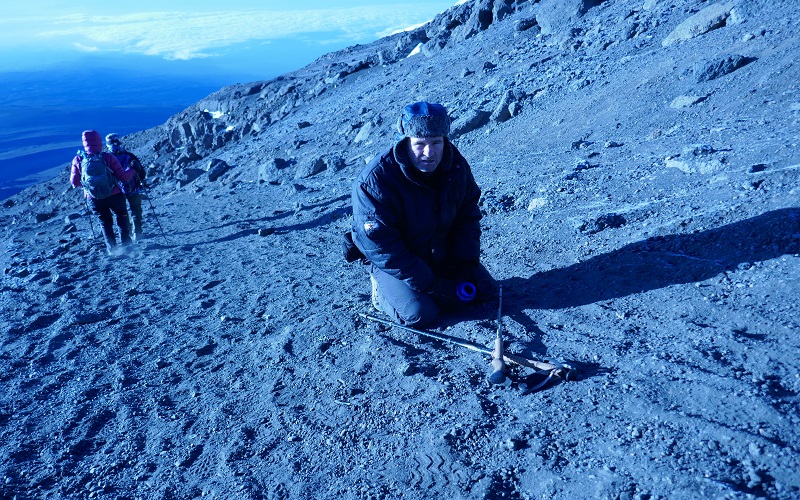
Tip: Understanding these zones helps you pack correctly and mentally prepare for temperature swings, from warm forest days to freezing summit nights.
When Is the Dry Season?
Kilimanjaro has two optimal dry periods:
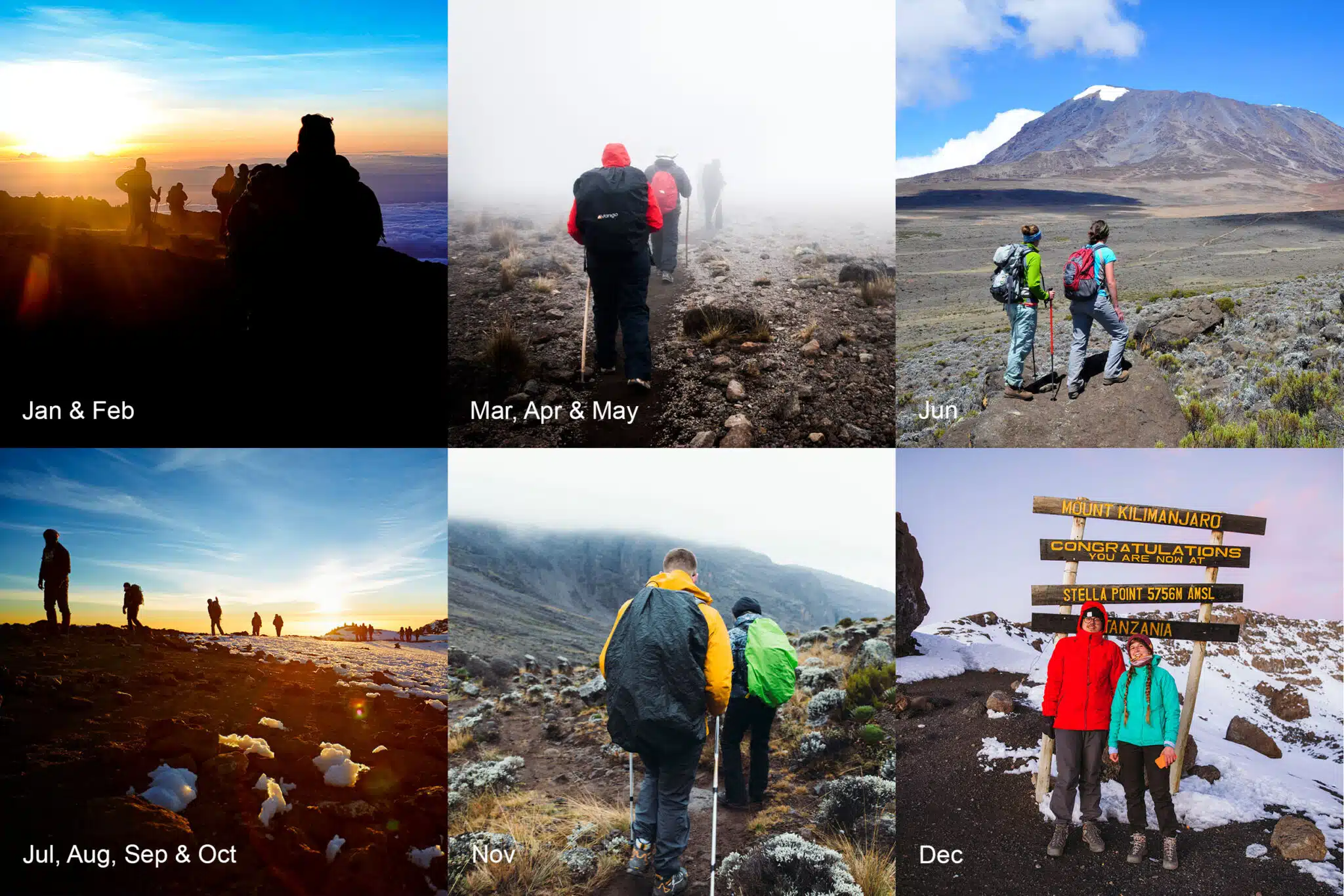
January to mid-March:
- Warmer temperatures during the day.
- Less crowded than the June–October peak.
- Clear skies make it easier to enjoy panoramic views and take sunrise photos at the summit.
June to October:
- Cooler, crisp air with minimal rainfall.
- Popular with climbers from Europe and North America.
- Trails are firm and well-maintained.
Outside these months, rainfall can make trails muddy and camps uncomfortable, and visibility is often poor.
Dry Season vs Wet Season: Why Timing Matters
Factor | Dry Season | Wet Season |
Trail Conditions | Firm, stable, and safe | Muddy, slippery, and challenging |
Summit Visibility | Clear skies, breathtaking views | Foggy, rainy, or cloud-covered |
Campsites | Dry, comfortable, easier to set up tents | Wet, muddy, cold, less comfortable |
Wildlife & Scenery | Wildlife easier to spot, vibrant vegetation | Trails harder to navigate, less visible wildlife |
Safety | Lower risk of falls, dehydration, hypothermia | Higher risk of accidents, fatigue, illness |
Conclusion: Dry-season climbs are safer, more predictable, and more enjoyable, making them ideal for first-time trekkers.
Route-Specific Advice During the Dry Season
Some Kilimanjaro routes benefit more from dry conditions than others:
Lemosho Route:
- Best for first-time climbers seeking gradual acclimatization.
- Trails firm and campsites easier to access.
- Dry season reduces risks of slippery trails in forest and moorland zones.
Machame Route:
- Very scenic, but steeper.
- Dry-season conditions make the climb safer and more enjoyable.
Rongai Route:
- Generally drier than other routes, even during wet months.
- Offers a quieter experience, ideal for climbers seeking solitude.
Tip: Longer dry-season itineraries allow more acclimatization days, increasing summit success rates.
Wildlife and Scenery in the Dry Season
Dry-season climbs not only improve safety but also enhance the experience of Kilimanjaro’s wildlife and landscapes:
- Animals gather near water sources, making sightings more frequent.
- Trails are less slippery, allowing trekkers to move carefully without missing wildlife moments.
- Alpine zones are easier to navigate, giving climbers clear panoramic views of valleys, glaciers, and surrounding savannah.
Tip: Early mornings are best for wildlife viewing, especially in the forest zone.

Crowds and Booking Tips
The dry season is peak climbing season, which means:
- Book early to secure your preferred route, guide, and porters.
- Expect some crowds, particularly on Machame and Lemosho routes.
- Plan logistics carefully to include acclimatization days, meals, and rest periods.
Proper planning ensures a smooth climb and reduces stress.
Gear and Clothing for Dry-Season Climbs
Even during the dry season, temperatures can drop below freezing at night and on summit day. Essential gear includes:
- Layered clothing (base, mid, and outer layers) for temperature regulation
- Insulated jacket and gloves for summit night
- Sunglasses, sunscreen, and lip balm to protect against UV rays
- Trekking poles and sturdy boots for dusty, uneven trails
Tip: Dry-season climbs reduce wet gear risks, but sun exposure and wind remain major challenges.
Altitude and Acclimatization Tips
Good weather can make climbers overconfident. Even in dry conditions:
- Stick to your acclimatization schedule.
- Drink plenty of water to prevent dehydration.
- Walk slowly, taking “pole pole” steps at higher altitudes.
Proper acclimatization is the single most important factor in summit success.
Safety Considerations
Even in the dry season, you must prepare for hazards:
- Strong winds at high altitude
- Cold summit temperatures
- Dehydration due to dry air
- Dust and loose gravel on trails
Following your guide’s instructions and using proper gear reduces risks.
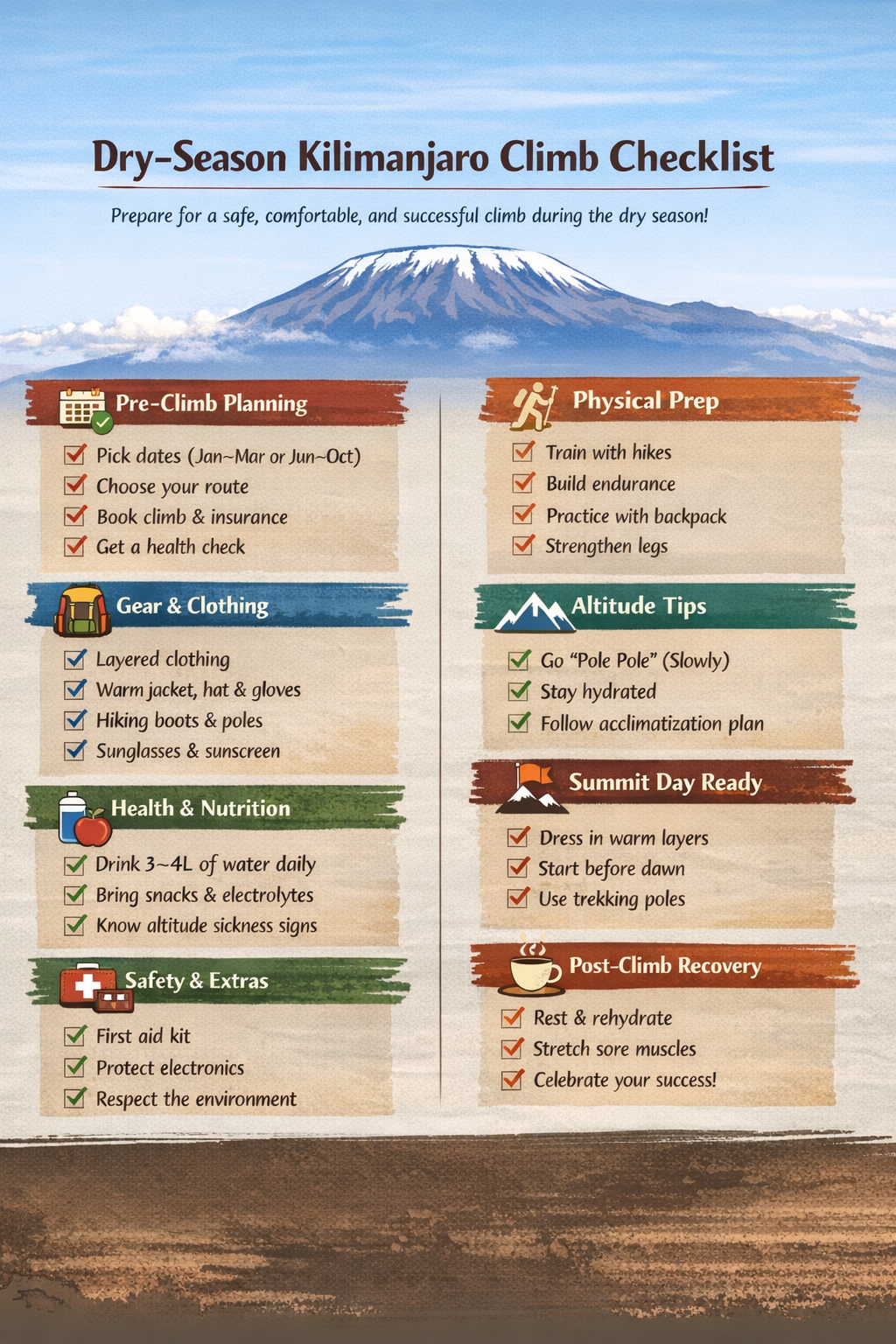
The dry season provides the optimal conditions for climbing Kilimanjaro: firm trails, dry campsites, predictable weather, and clear summit views. Choosing the right route, booking early, and preparing gear and your body ensures a safer, more enjoyable climb.
Let Rede Tours & Safaris plan your dry-season Kilimanjaro adventure. Our experienced guides, full support team, and carefully designed itineraries increase your chances of a successful summit while making your journey safe, memorable, and transformative. Book your climb today and experience the Roof of Africa like never before.