What Animals Can One See on Mount Kilimanjaro?
Mount Kilimanjaro is not only the highest mountain in Africa, but also a mountain full of life and natural beauty. Many people imagine Kilimanjaro as a land of snow, ice, and bare rock, but in reality, the mountain is made up of several distinct natural zones, each with its own climate, vegetation, and animal life. As you climb from the fertile base through dense forests and open highlands to the icy summit, you walk through these changing environments step by step. This gradual change is the reason why many different types of wildlife are able to live on the mountain. While Mount Kilimanjaro is not a classic safari destination with large herds of animals, it still offers quiet, special, and deeply meaningful wildlife experiences for those who take time to observe nature along the journey.
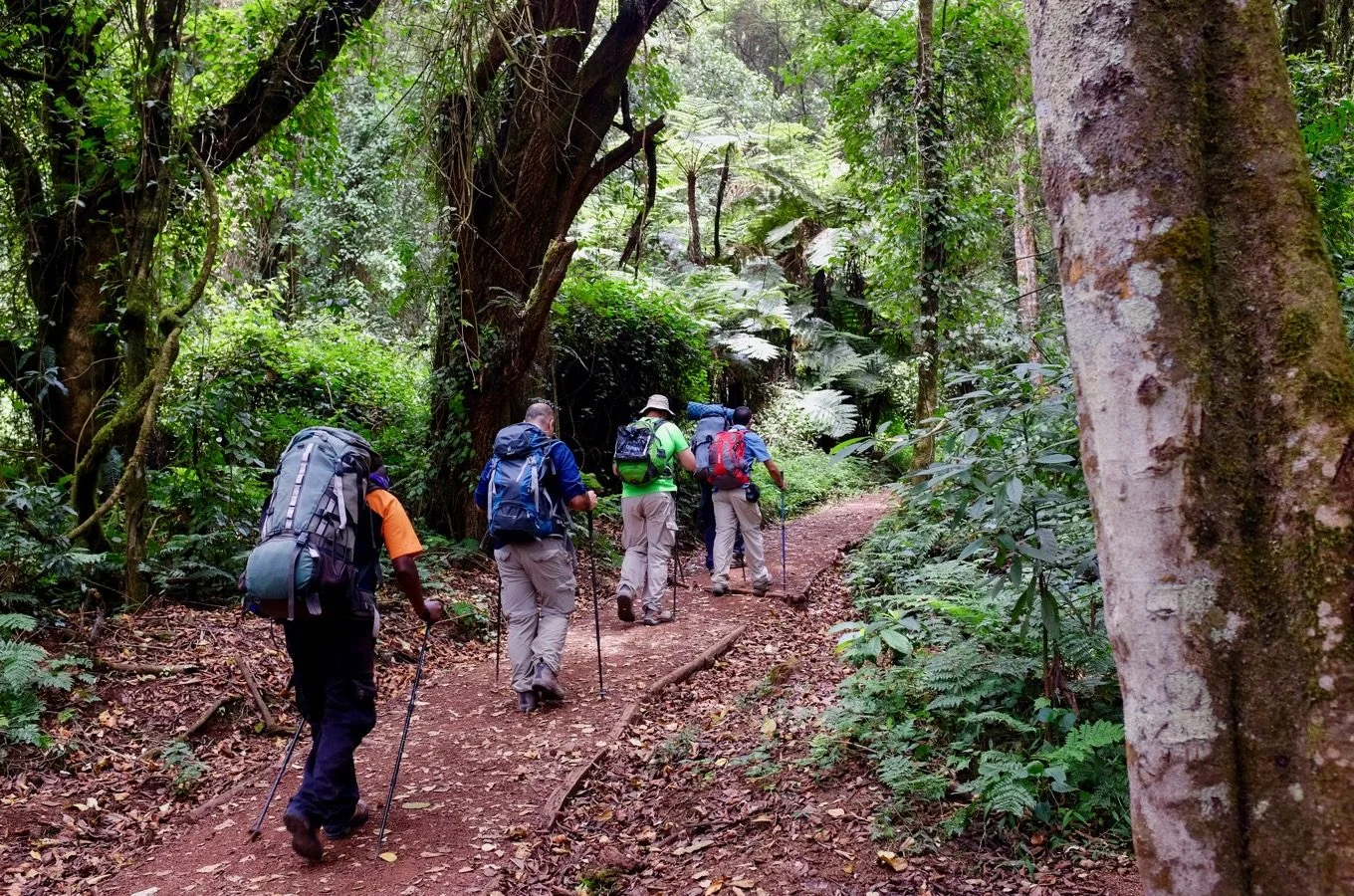
Animals in the Cultivation and Farmland Zone
The lowest part of Mount Kilimanjaro is where local communities live and farm. This area is filled with banana plantations, coffee farms, villages, and open land. Wildlife here has adapted to living close to people. You may see olive baboons, blue monkeys, small antelope, hares, and many bird species. Most wild animals move quietly through this zone, especially early in the morning or at night, as they travel between forest areas.
This zone is important because it:
- connects human life with the natural ecosystem of the mountain
- allows wildlife to move between protected forest areas
Animals in the Rainforest Zone
The rainforest zone is the richest wildlife area on Mount Kilimanjaro. The warm temperatures, heavy rainfall, and thick vegetation make it a perfect home for many animals. Blue monkeys are the most commonly seen animals here, often moving in groups through the trees. Black-and-white colobus monkeys also live in this forest and are easy to recognize by their black fur and long white tails.
Larger animals live in the rainforest too, although they are rarely seen. Elephants sometimes pass through hidden forest corridors, especially on quieter routes. Buffalo, bush pigs, and leopards also live here, but they are shy and mostly active at night. Most climbers see signs such as footprints, broken branches, or dung rather than the animals themselves.
Birdlife is very rich in the rainforest. Hornbills, turacos, cuckoos, and sunbirds fill the forest with calls and songs. Frogs, insects, and chameleons also thrive in this wet environment.
Animals in the Heath and Moorland Zone
Above the rainforest, the landscape opens into heath and moorland. The air becomes cooler, and trees are replaced by shrubs and giant plants like giant heather, groundsels, and lobelias. Fewer animals live here, but life still exists.
Small mammals such as mice and shrews hide among rocks and grass. These animals provide food for birds of prey. Birds are the most visible wildlife in this zone, including ravens, kestrels, eagles, and the lammergeier, also known as the bearded vulture. Reptiles like lizards may also be seen warming themselves on rocks during sunny moments.
Animals in the Alpine Desert Zone
The alpine desert zone is cold, dry, and windy, with very little vegetation. Food and water are scarce, so only a few animals can survive here. Most life in this zone is small and well adapted.
Insects such as beetles and spiders hide under rocks to protect themselves from freezing temperatures. Some birds, especially ravens, may fly through this zone while searching for food, but they do not stay for long.
Animals Near the Summit Zone
Near the summit of Mount Kilimanjaro, conditions are extremely harsh and challenging for life. Temperatures drop far below freezing, oxygen levels are very low, and there is almost no vegetation or food available. Because of these extreme conditions, no large animals are able to survive at this altitude.
On rare occasions, birds such as ravens have been seen flying close to the summit, which is both surprising and impressive given the cold and thin air. Apart from a few hardy insects that may be carried upward by strong winds, animal life near the summit is almost nonexistent, making this zone one of the most lifeless areas on the mountain.
So, what animals can you see on Kilimanjaro?
Jackson’s Chameleon
Jackson’s chameleon is a small, brightly colored reptile known for its ability to change colors depending on temperature, mood, or environment. Male chameleons have three prominent horns on their heads, giving them a unique, almost mythical appearance. They are slow-moving and are often found perched on branches, blending perfectly with the rainforest foliage. Observing a Jackson’s chameleon requires patience, as they are masters of camouflage.

Colobus Monkey
The colobus monkey is easily recognized by its striking black-and-white fur and long flowing tail. These monkeys live in social groups high in the forest canopy and are mostly herbivorous, feeding on leaves, fruit, and flowers. Unlike many other primates, colobus monkeys are quiet and move gracefully through trees. Spotting them is a highlight for hikers in Kilimanjaro’s rainforest zone.

Bush Baby
Bush babies are small, nocturnal primates with exceptionally large eyes that help them see in the dark. They are extremely agile, capable of leaping from tree to tree with great accuracy. During the night, bush babies can often be heard calling to each other with high-pitched cries, but seeing them is a challenge because they hide in tree hollows or thick vegetation during the day.

White-necked Raven
The white-necked raven is a large, intelligent bird with glossy black feathers and a distinctive white patch on its neck. It is known for its problem-solving skills and can often be seen soaring over open moorlands or forest edges. Remarkably adaptable, this bird can live at high altitudes and occasionally flies near Kilimanjaro’s upper slopes, providing climbers with rare and exciting sightings.

Blue Monkey
The blue monkey is a medium-sized primate with bluish-grey fur and a dark face framed by light markings. They are social animals, usually found in groups feeding on fruits, leaves, and insects in the forest. Active during the day, blue monkeys are frequently spotted along rainforest trails and are a favorite among climbers for their playful and curious behavior.

Serval Cat
The serval cat is a medium-sized wild feline with long legs, large ears, and a spotted coat. It is a highly skilled hunter, preying mainly on rodents, birds, and insects in open grasslands and moorlands. Servals are mostly nocturnal and very shy, so sightings are extremely rare. Their ability to leap and catch prey with precision makes them one of the most impressive predators on Kilimanjaro.

Duiker
Duikers are small, shy antelopes that prefer dense forest and shrubbery for cover. They feed on leaves, shoots, and fruit, often moving quietly to avoid predators. Though difficult to spot because of their timid nature, they play an important role in the forest ecosystem by helping disperse seeds through their droppings.

Marsh Mongoose
The marsh mongoose is a slender, semi-aquatic mammal commonly found near streams, wetlands, and damp forest areas. It hunts insects, small rodents, amphibians, and occasionally fish. Active both during the day and night, marsh mongooses are agile and cautious, often darting into cover at the slightest hint of danger. Their presence indicates a healthy water ecosystem in Kilimanjaro’s lower slopes.

Why Animals on Kilimanjaro Are Rarely Seen
Many animals on Mount Kilimanjaro are difficult to spot. Most wildlife is naturally shy and avoids humans. Thick forest vegetation also makes animals hard to see, even when they are nearby. In addition, many larger animals are active at night, when climbers are resting. For these reasons, wildlife sightings on Kilimanjaro are often:
- quiet and brief
- unexpected but special
Best Routes for Wildlife Viewing
Some climbing routes offer better chances to see wildlife than others. Routes such as:
- Lemosho and Machame pass through remote rainforest areas and offer better chances of seeing wildlife
- Marangu Route has more traffic and fewer forest sections, so wildlife is seen less often Choosing a quieter route increases your chances of spotting animals, especially in the lower zones.
Safety and Conservation on the Mountain
All wildlife on Mount Kilimanjaro is protected. Climbers are not allowed to feed, touch, or disturb animals. Feeding wildlife can harm them and change their natural behavior. Professional guides are trained to handle wildlife encounters safely and respectfully. By following park rules, climbers help:
- protect animals and their habitats
- keep the mountain safe for future generations
Why Wildlife on Mount Kilimanjaro Is Unique
The wildlife of Mount Kilimanjaro is special because it exists across many climate zones in one mountain. From warm farmland and rainforests to cold alpine deserts and icy peaks, animals have adapted to very different environments within a short distance.
While wildlife sightings are not the main reason people climb Kilimanjaro, they add depth and meaning to the journey. Seeing monkeys in the misty forest, hearing birds at sunrise, or spotting animal tracks along the trail reminds climbers that Kilimanjaro is not just a mountain to climb, but a living ecosystem shared by people, plants, and animals.
Mount Kilimanjaro is more than a high peak to reach; it is a living mountain filled with quiet and fascinating wildlife. From monkeys moving through the rainforest to birds flying over open moorland, each animal plays a role in the mountain’s ecosystem. Wildlife sightings on Kilimanjaro may be rare, but that is what makes them special and memorable.
As you climb higher, the changing environments show how life adapts to different conditions, from warm farmland to cold alpine deserts. By respecting nature, following park rules, and moving gently through the mountain, climbers become part of this natural balance.
If you are planning to climb Mount Kilimanjaro, take time to observe, listen, and appreciate the wildlife you encounter along the way. Choose Rede Tours and Safaris, we respect the environment, and make your journey not just a climb to the summit, but a meaningful experience connected to nature. Start your Kilimanjaro adventure with awareness, respect, and curiosity, and the mountain will reward you in unforgettable ways.