The Easiest Route to the Top of Mount Kilimanjaro
Climbing Mount Kilimanjaro is a dream for many travelers. Standing at 5,895 meters (19,341 feet), it is the highest mountain in Africa and the highest free-standing mountain in the world. Many people believe you must be an expert climber to reach the top, but that is not true.
In this guide, you will learn which route is the easiest to climb Mount Kilimanjaro, why it is considered the easiest, and what to expect as a beginner.
What Is the Easiest Route on Mount Kilimanjaro?
The Marangu Route is widely considered the easiest route to reach the summit of Mount Kilimanjaro. It is often called the “Coca-Cola Route” because it is more comfortable than other routes.
The Marangu Route is the best choice for:
- First-time climbers
- Beginners with no mountaineering experience
- Travelers who prefer sleeping in huts instead of tents
- People looking for a shorter and more direct route
Why the Marangu Route Is the Easiest?
1. Sleeping in Huts Instead of Tents
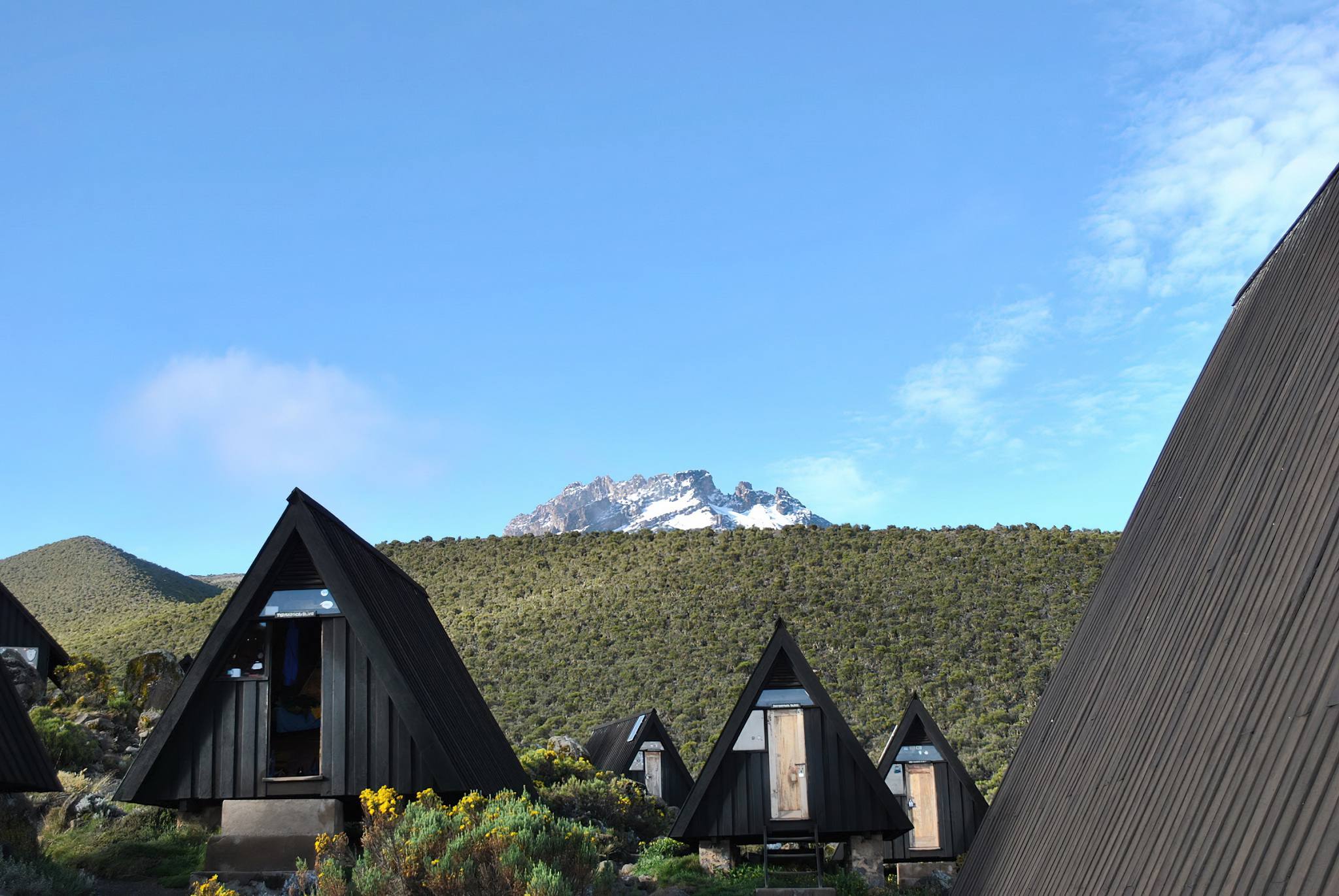
The Marangu Route is the only route on Mount Kilimanjaro where climbers sleep in mountain huts instead of tents. These huts are simple wooden buildings with beds and mattresses, which makes the climb more comfortable. Because you do not sleep on the ground, you stay warmer and drier, especially at higher altitudes where it can be very cold. Sleeping in huts also means you do not need to set up tents every day, which reduces physical effort. Getting better rest at night helps your body recover, gives you more energy for the next day, and improves your chances of reaching the summit successfully.
2. Shorter Distance and Fewer Days
The Marangu Route is shorter than most other Mount Kilimanjaro routes, which is why it is often completed in 5 or 6 days. This makes it one of the fastest ways to reach the summit. Because the distance is shorter, climbers walk fewer kilometers each day, which reduces physical strain on the body and makes the climb feel more manageable for beginners. The shorter schedule is also easier to plan for travelers who have limited time. However, even though the route is shorter, adding an extra acclimatization day is highly recommended, as it helps your body adjust to the altitude and greatly increases your chances of reaching the summit safely.
3. Gentle and Clear Trail
The Marangu Route has a clear, well-marked trail that is easy to follow from start to finish. There is no technical climbing involved, no steep rock scrambling, and no need for special mountaineering skills. Climbers do not need ropes, harnesses, ice axes, or crampons, and previous climbing experience is not required. You simply walk at a slow and steady pace while enjoying the changing scenery. This gentle and straightforward trail makes the Marangu Route very suitable for beginners and first-time Kilimanjaro climbers.
4. Gradual Climb in the Lower Sections
The lower sections of the Marangu Route have a gentle and gradual climb, which is very helpful for beginners. The trail passes through beautiful rainforest, open moorland, and alpine desert, allowing your body to adjust slowly to the increasing altitude. Because the early days are not too steep or tiring, climbers can walk comfortably, build strength, and gain confidence before reaching higher elevations. This gradual start makes the overall climb feel easier and more manageable for first-time climbers.
Marangu Route Day-by-Day Overview
The Marangu Route follows a clear and well-planned path, making it easy for beginners to understand what each day involves. Below is a simple day-by-day overview to help you know what to expect during the climb.
Day 1: Marangu Gate to Mandara Hut
On the first day, you start your climb at Marangu Gate and walk through lush rainforest. The trail is gentle and scenic, and you may see monkeys and colorful birds along the way. This day is mainly about getting used to walking on the mountain. After about 4 to 5 hours of hiking over a distance of around 8 km, you arrive at Mandara Hut, where you eat dinner and sleep for the night.
Day 2: Mandara Hut to Horombo Hut
On day two, the trail becomes more open as you leave the rainforest and move into moorland. You enjoy beautiful views of Mawenzi Peak along the way. The walk is longer, about 12 km, and takes around 6 to 8 hours. You may start to feel the altitude slightly, but the path remains gentle and manageable. You spend the night at Horombo Hut.
Day 3: Acclimatization Day (Recommended)
This day is very important for your safety and success. You stay at Horombo Hut and take a short hike during the day before returning to rest. This helps your body adjust to the altitude and reduces the risk of altitude sickness. Taking this extra day greatly improves your chances of reaching the summit.
Day 4: Horombo Hut to Kibo Hut
On day four, you hike through the alpine desert zone. The landscape becomes dry, rocky, and open, and the air feels thinner. The distance is about 10 km and usually takes 6 to 8 hours. This is a quiet and challenging day, and you arrive at Kibo Hut in the afternoon. You eat early, rest, and prepare for the summit climb during the night.
Day 5: Summit Day – Kibo Hut to Uhuru Peak to Horombo Hut
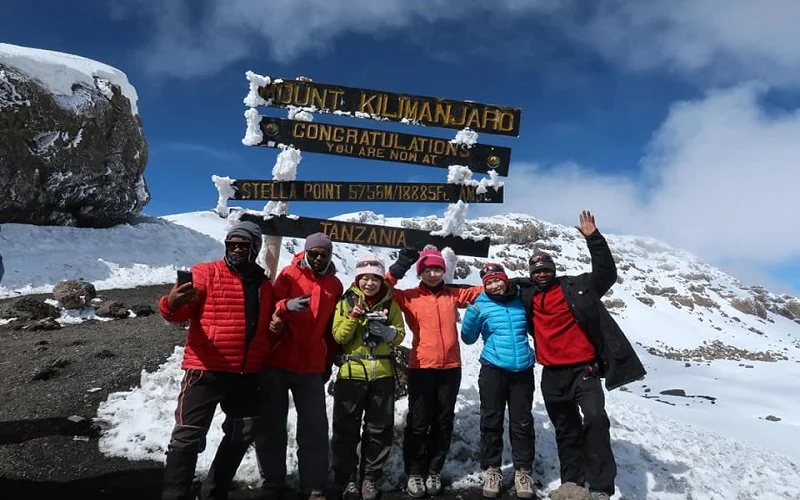
Summit day is the longest and most challenging day. You begin climbing around midnight, walking slowly in the cold and dark. The climb is tough but does not require technical skills. After several hours, you reach Uhuru Peak, the highest point in Africa. After taking photos and enjoying the moment, you descend back to Horombo Hut for rest.
Day 6: Horombo Hut to Marangu Gate
On the final day, you descend back through the rainforest to Marangu Gate. The walk is about 20 km and takes 5 to 6 hours. At the gate, you receive your summit certificate and celebrate the successful completion of your Kilimanjaro climb.
Success Rate of the Marangu Route
The Marangu Route has a moderate success rate compared to other Kilimanjaro routes. This is mainly because many climbers choose the shorter 5-day itinerary, which does not give the body enough time to adjust to the high altitude. Altitude, not fitness, is the main challenge on Mount Kilimanjaro, and proper acclimatization is very important, especially for beginners.
However, the success rate can be greatly improved by following a few simple and important steps.
• Choose the 6-day option
Adding one extra day allows your body more time to adjust to the altitude. The additional acclimatization day, usually spent at Horombo Hut, helps reduce the risk of altitude sickness and increases your chances of reaching the summit safely. Beginners who choose the 6-day Marangu Route have a much higher success rate than those who rush the climb.
• Walk slowly
Climbing slowly is one of the most important rules on Kilimanjaro. Walking at a slow, steady pace helps your body adapt to the thinning air. There is no need to rush, and going slowly actually increases your chance of success. Many climbers fail because they move too fast in the early days.
• Drink plenty of water
Staying well hydrated helps your body cope with altitude. Climbers are encouraged to drink several liters of water each day. Proper hydration helps reduce headaches, fatigue, and other symptoms of altitude sickness, making the climb more comfortable and safer.
• Listen to your guide
Your guide has experience with altitude and understands how the body reacts on the mountain. Listening to their advice about pace, rest, hydration, and health checks is very important. Guides can recognize early signs of altitude sickness and will make decisions that protect your safety and increase your chance of reaching the summit.
With good preparation, the right mindset, and proper acclimatization, many beginners successfully reach Uhuru Peak on the Marangu Route. When climbed correctly, it remains one of the most achievable routes for first-time Kilimanjaro climbers.
Pros and Cons of the Marangu Route
Pros
• Easiest route for beginners
The Marangu Route is considered the easiest Kilimanjaro route because the trail is clear, gentle, and does not require technical climbing skills. Beginners can focus on walking at a steady pace and enjoying the experience without needing special mountaineering knowledge.
• Hut accommodation
This is the only route on Mount Kilimanjaro that offers mountain huts instead of tents. The huts provide beds, mattresses, dining areas, and shelter from cold and rain. Sleeping in huts helps climbers rest better, which is very important for recovery and altitude adjustment.
• Shorter climbing time
The Marangu Route is shorter than most other routes and is usually completed in 5 or 6 days. This makes it a good option for travelers with limited time who still want to reach the summit.
• Well-marked trail
The path is wide, clear, and easy to follow. There is little risk of getting lost, and the walking is straightforward. This makes the route feel safer and more comfortable for first-time climbers.
• Lower cost compared to longer routes
Because the route is shorter and uses huts instead of camping equipment, the overall cost is often lower. This makes the Marangu Route a popular choice for budget-conscious climbers.
Cons
• Lower acclimatization time
The biggest drawback of the Marangu Route is limited time for acclimatization, especially on the 5-day option. Less time at altitude increases the risk of altitude sickness, which can affect summit success.
• Can be crowded
Because it is popular and considered easier, the Marangu Route can be busy, especially during peak seasons. This may reduce the feeling of wilderness for some climbers.
• Same route for ascent and descent
Climbers use the same path to go up and come down. This means less variety in scenery compared to routes that descend on a different trail.
• Slightly lower success rate than longer routes
Due to shorter acclimatization time, the success rate on the Marangu Route is slightly lower than on longer routes like Machame or Lemosho. Choosing the 6-day option can help improve success chances.
Is the Marangu Route Really Better Than Other Routes?
Other routes like Machame and Lemosho have higher success rates due to better acclimatization, but they are longer and more demanding.
The Marangu Route is still the easiest in terms of comfort and simplicity, especially for first-time climbers who want less camping, fewer steep sections and direct path to the summit
Who Should Choose the Marangu Route?
- First-time Kilimanjaro climbers
- Beginners with average fitness
- Travelers with limited time
- People who prefer huts over tents
- Budget-conscious climbers
Preparation Tips for the Easiest Kilimanjaro Climb
- Train with regular walking and hiking
- Break in your hiking boots
- Pack warm clothing
- Choose a reliable tour operator
- Add an extra acclimatization day
The Marangu Route is the easiest route to the top of Mount Kilimanjaro for beginners.
It offers a simple trail, hut accommodation, and a shorter schedule, making it a popular choice for first-time climbers.
With proper preparation, a slow pace, and a positive mindset, reaching the summit of Africa’s highest mountain is an achievable and unforgettable experience.