Introduction
The Great Migration is one of the most spectacular wildlife events on Earth. Every year, more than two million wildebeest, zebras, and gazelles travel across the plains of East Africa in search of fresh grass and water. This incredible journey happens between Tanzania and Kenya, mainly inside the famous ecosystems of the Serengeti National Park and Masai Mara National Reserve.
During the Great Migration, visitors can see massive herds covering the plains, dramatic river crossings with crocodiles, and predators like lions and cheetahs hunting. Thousands of animals move together, creating one of the most exciting wildlife spectacles in Africa. For many, witnessing this is the ultimate safari experience.
What Is the Great Migration?
The Great Migration is the yearly movement of wildlife through the ecosystem of Serengeti National Park in Tanzania and Masai Mara National Reserve in Kenya. Every year, around 1.5 million wildebeest travel across the plains, moving together with more than 200,000 zebras and thousands of Thomson’s gazelles. These animals migrate because they are searching for fresh grass and water after seasonal rains. During this journey, the herds move about 800 to 1,000 kilometers across different areas of Tanzania and Kenya. The Great Migration is not a single event that happens once a year. Instead, it is a continuous, year-round cycle, which means the animals are always moving somewhere within the Serengeti–Mara ecosystem.
Best Safari Destinations to Witness the Great Migration
1. Serengeti National Park (Tanzania)
The Serengeti National Park is the most famous place in the world to see the Great Migration. Located in northern Tanzania, the park is known for its endless plains, large wildlife populations, and dramatic landscapes. It is home to the largest migration herds and offers excellent chances of seeing predator action, including lions, cheetahs, and leopards hunting the migrating animals. The wide open plains also make the Serengeti perfect for wildlife photography, and it is widely considered one of the best safari parks in Africa.
Different areas of the Serengeti offer different migration experiences throughout the year. In the Southern Serengeti, especially around the Ndutu area, the migration is most active between January and March during the wildebeest calving season. During this time, thousands of baby wildebeest are born every day, attracting many predators. The Central Serengeti, also known as the Seronera area, has resident wildlife all year and is a great place to see animals like lions, leopards, and cheetahs. In the Northern Serengeti, especially near the Mara River, visitors can witness the dramatic river crossings between July and October, when thousands of animals attempt to cross crocodile-filled waters.
2. Masai Mara National Reserve (Kenya)
The Masai Mara National Reserve in Kenya is the northern extension of the Serengeti ecosystem and becomes the center of the Great Migration between July and October. During this period, massive herds of wildebeest, zebras, and gazelles arrive from Tanzania, creating one of the most exciting wildlife spectacles in the world.
The Masai Mara is famous for its dramatic river crossings and high concentration of predators. It is also known for its beautiful landscapes and excellent opportunities for safari photography. Because the reserve is relatively compact, visitors can often see many animals in a short time during game drives. When the migration reaches the Masai Mara, thousands of animals must cross the dangerous Mara River. These crossings are very dramatic because predators such as lions, leopards, cheetahs, hyenas, and large Nile crocodiles wait near the river to hunt.
3. Ndutu Region (Southern Serengeti & Ngorongoro)
The Ndutu region, located between the southern Serengeti and the Ngorongoro Conservation Area, is one of the best places to witness the Great Migration during the calving season. Between January and March, seasonal rains turn the plains green and attract massive herds of wildebeest and zebras.
During this time, around 500,000 baby wildebeest are born in just a few weeks, making it one of the most active wildlife periods in the Serengeti ecosystem. Because so many newborn animals are present, predator activity increases, and visitors often see lions, cheetahs, and hyenas hunting. The wide-open plains of Ndutu also allow excellent wildlife viewing and photography. Another advantage of visiting this area is that it often has fewer crowds compared to some of the more famous migration locations.
Great Migration Calendar (Month-by-Month)
• January – March:
During this period, the migration is mainly in the Southern Serengeti and the Ndutu area. This is the calving season, when thousands of baby wildebeest are born every day on the open plains. Because of the large number of newborn animals, predators such as lions, cheetahs, and hyenas are very active in this area.
• April – May:
After the calving season, the herds begin moving toward the Central Serengeti. This time usually falls during the rainy season, which means there are fewer tourists in the park. The landscapes are very green and beautiful, and visitors can see large groups of animals traveling across the plains.
• June – July:
During these months, the migration continues toward the Western Serengeti. This is when the animals begin crossing rivers such as the Grumeti River. These crossings can be dramatic because crocodiles often wait in the water as the herds attempt to cross.
• July – October:
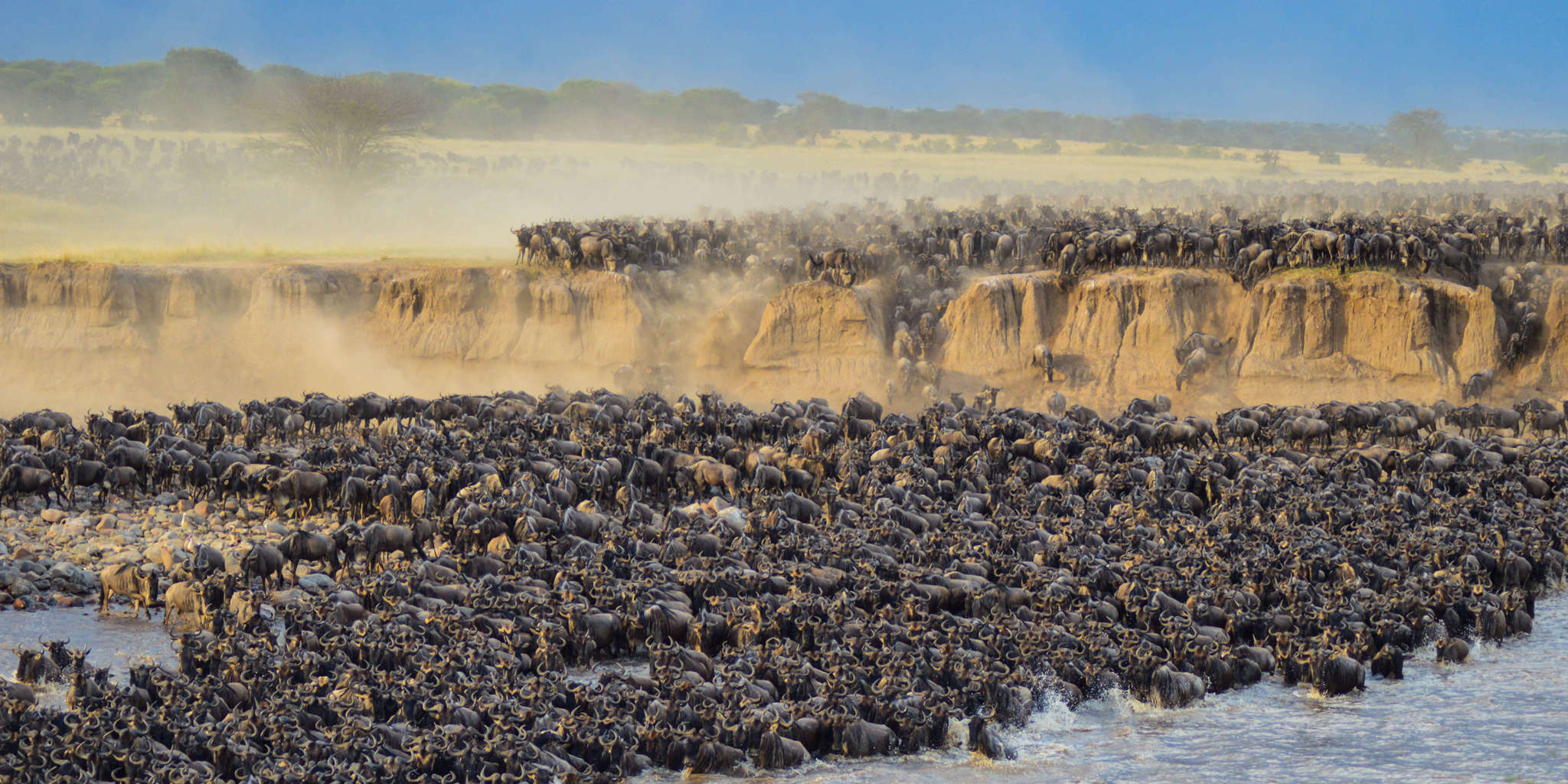
This is the most famous period of the Great Migration. The herds move toward the Northern Serengeti and then into the Masai Mara in Kenya. During this time, thousands of animals attempt to cross the Mara River, creating one of the most dramatic wildlife spectacles in the world.
• November – December:
At the end of the year, the herds begin moving back toward the Southern Serengeti. They follow the seasonal rains and fresh grass, completing the natural migration cycle before the calving season begins again early the following year.
Animals You Can See During the Great Migration
The migration attracts many predators and other wildlife species. During a migration safari you may see:
Large Mammals
- Wildebeest
- Zebras
- Gazelles
- Elephants
- Giraffes
- Buffalo
Predators
- Lions
- Leopards
- Cheetahs
- Hyenas
- African wild dogs
Other Wildlife
- Crocodiles in rivers
- Hippos in water pools
- Hundreds of bird species
Best Time to See the Great Migration
Calving Season
Best Time: January – March
Location: Southern Serengeti / Ndutu
During this period, the migration takes place in the Southern Serengeti and the Ndutu plains. This is the calving season when thousands of baby wildebeest are born every day. Because of the newborn animals, predators such as lions, cheetahs, and hyenas are very active, making this an exciting time for wildlife viewing.

Green Season Herds
Best Time: April – May
Location: Central Serengeti
During the green season, the herds move toward the Central Serengeti. The rainy season makes the landscapes very green and beautiful. There are usually fewer tourists at this time, which means visitors can enjoy a quieter safari experience while still seeing large groups of animals.

River Crossings
Best Time: June – July
Location: Western Serengeti
At this time, the migration moves toward the Western Serengeti. The animals begin crossing rivers such as the Grumeti River. These crossings are exciting moments because crocodiles often wait in the water as the herds attempt to cross.

Famous Mara River Crossings
Best Time: July – October
Location: Northern Serengeti / Masai Mara
This is the most famous migration experience. The herds move toward the Northern Serengeti and into the Masai Mara in Kenya. Thousands of animals attempt to cross the Mara River, creating dramatic wildlife scenes with strong currents and large crocodiles. Because of these spectacular crossings, many travelers consider July to October the best time to witness the Great Migration.
How to Plan a Great Migration Safari
Planning the right safari is essential to maximize your chances of seeing the Great Migration in Serengeti National Park and the surrounding wildlife areas. Key factors include safari length, combining multiple parks, and booking early.
• Choose the Right Safari Length
· 4–5 days – good for seeing several areas
· 6–7 days – better chance of witnessing river crossings
· 8–10 days – full migration experience
Most migration safaris last between 4 and 10 days. A 4–5-day safari is suitable for travelers with limited time and allows visits to several areas of the Serengeti. A 6–7-day safari provides a better chance of witnessing important migration events, such as river crossings. For the most complete experience, an 8–10-day safari gives enough time to explore different regions of the Serengeti and follow the movement of the herds throughout their journey.
• Combine Multiple Parks
· Tarangire National Park
· Serengeti National Park
· Ngorongoro Crater
A classic Northern Tanzania safari often combines several parks. This allows visitors to see a wide variety of wildlife, including the Big Five, while also following the Great Migration. Visiting multiple parks provides diverse landscapes and unique photographic opportunities.
• Book Early
· Great Migration safaris are extremely popular
· Book 6–12 months in advance
· Especially important during peak migration months
Because migration safaris are very popular, lodges and camps can fill up quickly, especially during the peak migration season. Booking 6–12 months in advance ensures access to the best accommodations and game drives. Early planning makes the safari smoother, more comfortable, and increases your chances of seeing all the key migration highlights.
Why Tanzania Is the Best Country for the Great Migration
Tanzania is considered the best country to witness the Great Migration because it hosts most of the migration cycle, especially within the Serengeti National Park ecosystem. Travelers choose Tanzania for its larger wildlife areas, which allow herds to roam freely across vast plains. The country also offers more migration viewing locations, giving visitors multiple opportunities to see different stages of the migration, from calving to river crossings. Tanzania is home to some of the most famous safari parks, including Serengeti, Tarangire, and Ngorongoro, which provide excellent wildlife experiences. In addition, the country’s incredible landscapes of savannahs, rivers, and rolling hills create breathtaking safari scenery. Many safari experts consider the Serengeti the best wildlife park on Earth, making Tanzania the ultimate destination for anyone wanting to witness the Great Migration.
⇒The Great Migration is one of the most unforgettable wildlife experiences in Africa. Watching thousands of animals move across the savannah is truly breathtaking. Whether you want to see river crossings, newborn calves, or predator action, the Great Migration offers a once-in-a-lifetime adventure.
For travelers planning a safari in Tanzania or Kenya, witnessing this natural wonder should be at the top of your bucket list.